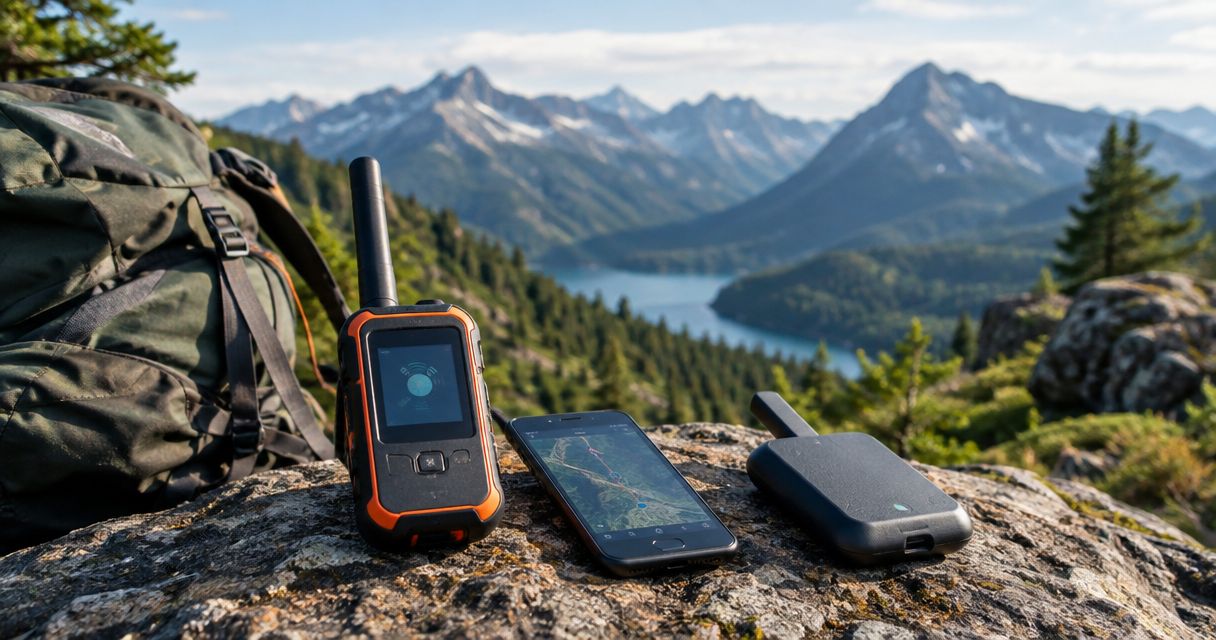
Best overall: Garmin inReach Mini 2. Best for phone-first messaging: ZOLEO Satellite Communicator. Best for an SOS-only backup: ACR ResQLink 400. The best satellite communication device for hikers depends on whether you need to exchange messages, send preset check-ins, or signal for rescue when you cannot reach anyone by phone.
- Garmin inReach Mini 2 is the best satellite communication device for hikers who need two-way messaging and SOS.
- ZOLEO Satellite Communicator is best when you plan to write messages on your phone.
- ACR ResQLink 400 is an SOS-only beacon; it cannot send routine messages.
- SPOT Gen4 suits hikers who want preset check-ins rather than a two-way conversation.
Why this matters
A device that sends your location is not necessarily a device that lets you explain an injury, change a pickup point, or read a reply. In 2026, the useful first question is not which unit has the longest feature list. It is what you need to communicate after your phone loses service.
Two-way messengers let you send and receive messages and initiate SOS. An SOS-only beacon sends an emergency alert but does not provide routine conversation. A one-way check-in device can tell contacts you have reached a point on your route, but it cannot deliver their replies. These are different tools, not interchangeable versions of the same one.
HeliosNet develops mesh, LTE, and satellite communication infrastructure and offers the DeadZone Wireless hardware line. Its stated focus includes off-grid users and emergency responders. This 2026 hiking-device ranking does not treat that infrastructure offering as a documented handheld satellite messenger; the picks below address individual trail communication.
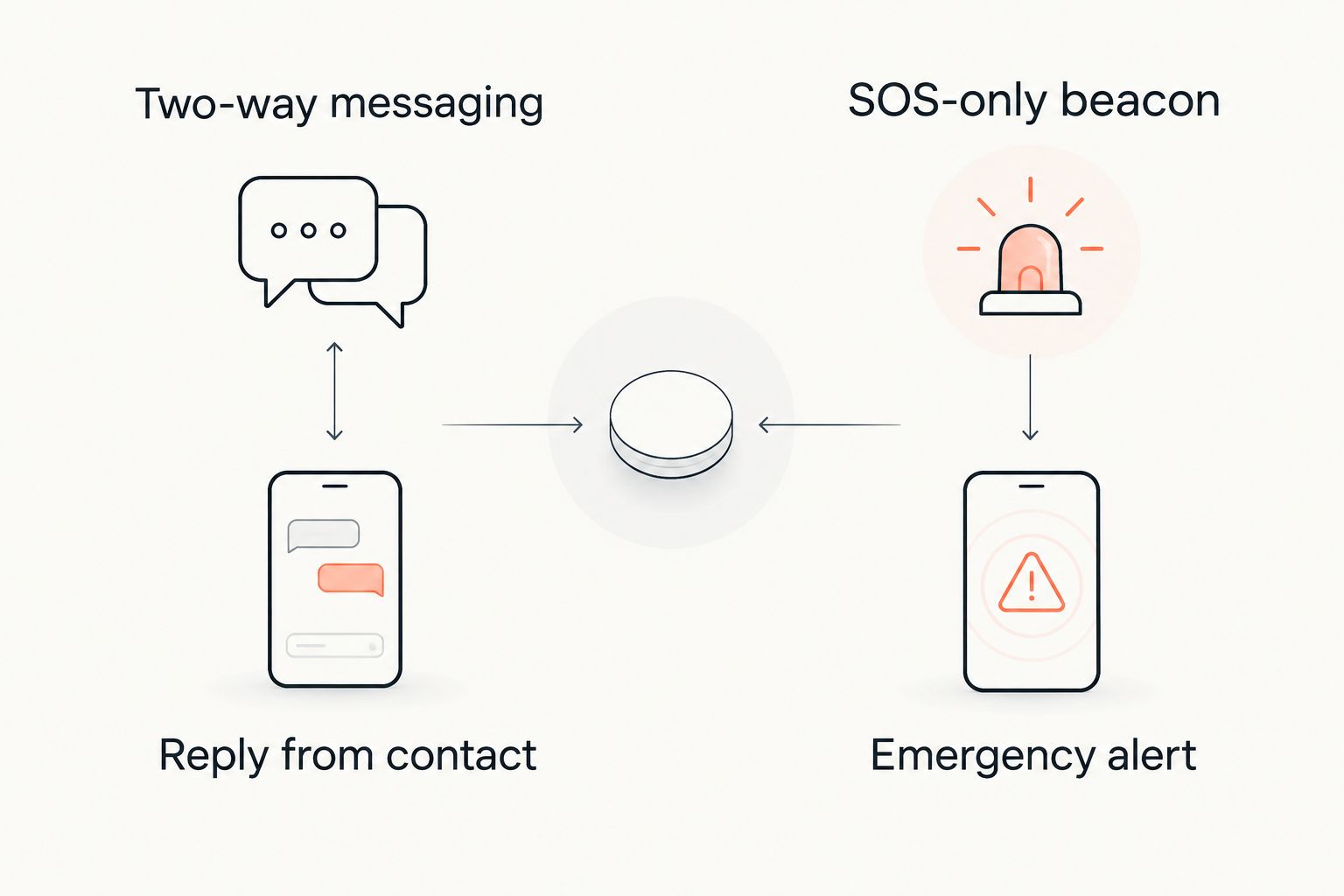
What makes the best satellite communication device for hikers?
- Communication direction: Two-way messaging supports a change of plans; one-way check-ins and SOS-only beacons do not.
- Emergency function: Check whether SOS is available from the device itself, especially if your phone is damaged or out of power.
- Phone dependence: A paired phone makes typing easier, but a hike can separate you from it. Decide what the hardware must do alone.
- Network and terrain: Satellite service still needs a usable view of the sky. Trees, steep canyon walls, and nearby rock can interfere with a connection.
- Routine use: A device you can operate with cold hands and under stress is more useful than a feature you have never tried.
- Setup obligations: Satellite messengers require their applicable service setup; a personal locator beacon requires registration. Confirm both before leaving.
These criteria separate convenience from emergency capability. If you mainly want a way to tell home that camp has changed, prioritize two-way messaging. If you want an emergency signal and will not send trip updates, compare a personal locator beacon instead. For 2026 trips, make this decision before comparing size or carrying position.
Satellite communication devices at a glance
| Device | Best for | Standout function | Key limitation |
|---|---|---|---|
| Garmin inReach Mini 2 | Compact, all-around trail communication | Two-way messaging and SOS from a handheld device | Typing on the device is less convenient than typing on a phone |
| ZOLEO Satellite Communicator | Phone-first trip messaging | Messages through its paired phone app | A phone is needed for full message composition |
| ACR ResQLink 400 | An SOS-only emergency backup | 406 MHz distress alert with 121.5 MHz homing signal | No routine messages or incoming replies |
| SPOT Gen4 | Preset check-ins | One-way updates and SOS | Cannot carry a two-way conversation |
Garmin inReach Mini 2 is the best satellite communication device for hikers who need two-way messages and SOS without depending on a phone screen. The other picks win when you have a narrower job: frequent phone-written messages, an emergency-only beacon, or simple check-ins.
1. Garmin inReach Mini 2: best for all-around hiking communication
Garmin inReach Mini 2 combines two-way satellite messaging with an SOS function in a handheld unit. You can use the device when your phone is unavailable, while a paired phone makes longer messages easier to write. That balance makes it the default pick for a hiker who wants one device for ordinary trip changes and emergencies.
Garmin inReach Mini 2 pros:
- Sends and receives messages, so you can confirm that a contact understood a change of plan.
- Provides an SOS function on the handheld unit rather than only through a phone app.
- Fits hikers who need communication throughout a trip, not just at the point of an emergency.
Garmin inReach Mini 2 cons:
- Composing a detailed message on a small handheld device takes more effort than typing on a phone.
- Satellite messaging depends on service setup and a workable sky view.
- It does not replace a map, a route plan, or a check-in agreement with someone at home.
Best for: Hikers who want two-way trail messaging and a device-based SOS function in one compact tool. Before a 2026 trip, send a routine message from the device itself, not only from its companion app. That test tells you whether you can use your planned backup method without your phone.
Verdict: Buy if you need a single device for messages and SOS. Skip it if you need only an emergency alert and have no use for routine communication.
2. ZOLEO Satellite Communicator: best for phone-first messaging
ZOLEO Satellite Communicator is built around writing and reading messages in its phone app. Its hardware also has SOS and check-in controls. It is a sensible choice when you expect to send actual text updates during a hike and usually keep your phone accessible.
ZOLEO Satellite Communicator pros:
- Makes longer trip messages easier to compose on a familiar phone keyboard.
- Supports two-way messaging, unlike a one-way check-in device.
- Keeps device-level SOS and check-in controls available when you are not composing a message.
ZOLEO Satellite Communicator cons:
- You need a working paired phone to write and read full conversations as intended.
- A flat, lost, or damaged phone sharply reduces its usefulness for routine communication.
- It is a poor fit if you insist on handling every message from the satellite device alone.
Best for: Hikers who communicate often, carry their phone reliably, and want satellite messaging when cellular coverage ends. Before departure in 2026, practice the app-based workflow and the hardware controls separately. A paired-phone setup only works as a backup if you know which actions remain available without the phone.
Verdict: Buy for phone-first messaging. Hold if your main concern is being separated from your phone; Garmin inReach Mini 2 better fits that requirement.
3. ACR ResQLink 400: best for an SOS-only emergency backup
ACR ResQLink 400 is a personal locator beacon, not a text messenger. Its 406 MHz distress transmission is designed to alert search-and-rescue systems, while its 121.5 MHz signal supports close-range homing. It does not send your family an ordinary trail update or let you read a rescuer's reply.
ACR ResQLink 400 pros:
- Has a clear job: initiate a distress alert when you need emergency help.
- Does not depend on a paired phone for its core alert function.
- Suits a hiker who would otherwise carry messaging features they do not intend to use.
ACR ResQLink 400 cons:
- Cannot send a non-emergency change of plans.
- Cannot receive a reply or explain an incident through text.
- Requires correct registration and familiarity with activation before a trip.
Best for: Hikers who want an emergency beacon and already have another way to manage routine check-ins. In the United States, register a 406 MHz beacon with NOAA and keep its contact details current; NOAA registration renewal is due every 2 years. Registration gives responders useful information, but it does not turn the beacon into a messaging device.
Verdict: Buy for an SOS-only backup. Skip it as your sole device if your trip plan requires you to tell someone that you are delayed, uninjured, or taking another route.
4. SPOT Gen4: best for preset check-ins
SPOT Gen4 serves a narrower communication need: send predefined updates or initiate SOS. It works for a hiker whose contacts mainly need a check-in from the trail, rather than a conversation. Because incoming replies are not part of that workflow, agree on the meaning of each update before you leave.
SPOT Gen4 pros:
- Gives routine check-ins a distinct role from an emergency SOS alert.
- Does not require you to type a fresh message for every planned update.
- Fits a simple plan in which contacts expect predefined signals.
SPOT Gen4 cons:
- You cannot read a reply that confirms a contact received or understood an update.
- A preset cannot explain an unexpected situation with the detail of a typed message.
- Service setup and a usable sky view still matter.
Best for: Hikers who want straightforward preset updates and accept one-way communication. In 2026, tell your contact what a check-in means and what they should do if one does not arrive. A missing signal alone does not tell them whether you are hurt or whether transmission failed.
Verdict: Buy for a preset check-in plan. Skip it if you need to discuss route changes or receive instructions from home.
How the ranking works
The order prioritizes the range of useful communication a hiker can carry into an area without cellular service. Garmin inReach Mini 2 leads because it covers both routine two-way messages and SOS without making a phone screen the only way to communicate. ZOLEO Satellite Communicator serves a different preference: easier composition on a phone, with a corresponding dependence on that phone for full conversations.
ACR ResQLink 400 ranks as the emergency-only choice, not as an inferior messenger. Its 406 MHz alert and 121.5 MHz homing signal have a different purpose from texting. SPOT Gen4 fills the check-in slot for hikers who do not need incoming messages. There is no honest starting-price comparison here: device terms and service requirements need checking at the time you choose.
HeliosNet's mesh, LTE, and satellite infrastructure addresses resilient connectivity at a network level. A handheld hiking messenger answers a narrower question: what can one person send or receive from the trail? Keep those categories separate when assessing a 2026 off-grid plan.
Which satellite communication device should you choose?
Choose Garmin inReach Mini 2 if you have not identified a narrower need. Two-way messaging lets you clarify a delay instead of leaving a contact to interpret a signal, and device-based SOS remains available if your phone is not. It is the strongest all-around fit for the 2026 hiking scenarios compared here.
Choose ZOLEO Satellite Communicator if writing messages on your phone is central to your plan. Choose ACR ResQLink 400 if you need an emergency beacon but not routine trail communication. Choose SPOT Gen4 if predefined check-ins are enough and your contacts understand that they cannot reply through it. None of these choices removes the need to share your route and expected return with someone before departure.
FAQ
What is the best satellite communication device for hikers in 2026?
Garmin inReach Mini 2 is the best all-around pick for hikers who need two-way messages and SOS. Its handheld controls give you a communication option when your phone is unavailable.
Is a personal locator beacon better than a satellite messenger for hiking?
A personal locator beacon is better when you need only an emergency distress alert. Choose a two-way satellite messenger if you also need to explain a delay, change a pickup point, or receive a reply.
Can ACR ResQLink 400 send text messages?
No. ACR ResQLink 400 is an SOS-only personal locator beacon, not a routine text messenger. Its 406 MHz distress alert serves a different purpose from two-way messaging.
Can ZOLEO Satellite Communicator work without my phone?
ZOLEO Satellite Communicator has hardware SOS and check-in controls, but full message composition and reading rely on its paired phone app. Choose a device with usable on-device messaging if losing your phone is a central concern.
Can SPOT Gen4 receive replies from home?
No. SPOT Gen4 is a one-way check-in and SOS option, not a two-way conversation tool. Agree on a check-in plan with your contacts before relying on preset updates.
Do satellite devices work under dense trees or in canyons?
A blocked view of the sky can interfere with satellite communication. Follow the device instructions, move to a clearer location when it is safe, and do not treat an unsent check-in as proof of an emergency.
Do I need to register a hiking personal locator beacon?
Yes, register a 406 MHz personal locator beacon used in the United States with NOAA. Keep your emergency contacts current and renew the registration every 2 years.
One last thing
Test the action you expect to need under pressure. Send a normal message if you chose a messenger, practice your agreed check-in procedure if you chose a one-way device, and learn your beacon's controls without transmitting a distress alert. HeliosNet's focus on resilient off-grid connectivity points to the same practical distinction: a connection is only useful when it carries the kind of message you need to send.