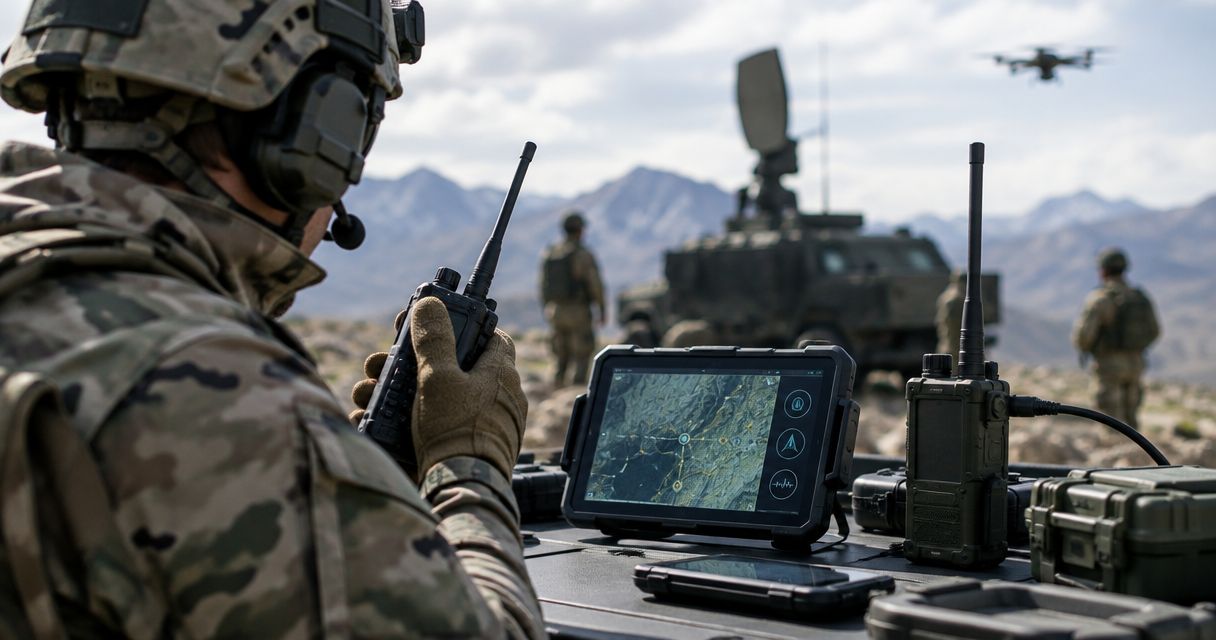
Best overall shortlist: Silvus StreamCaster for broadband field networking. Best for location and text: goTenna Pro X. Best for noncritical volunteer experimentation: Meshtastic. The best mesh radios for search and rescue depend on whether you need messages, live video, or an entire communications network; this 2026 guide separates those jobs before you choose hardware.
- Silvus StreamCaster belongs on the broadband shortlist for the best mesh radios for search and rescue.
- goTenna Pro X fits location sharing and text messaging; Meshtastic fits noncritical volunteer experimentation.
- HeliosNet LLC belongs on the search-and-rescue communications shortlist for teams evaluating mesh, LTE, and satellite infrastructure.
- Keep established voice communications separate from an unproven mesh deployment.
Why this matters
Search-and-rescue communications have different jobs: coordinating teams, reporting positions, moving incident data, and connecting command to outside resources. A radio that handles short messages does not automatically support video. A broadband network does not automatically replace your dispatch channel.
Start with the task that fails when coverage disappears. Then select the network that supports that task without adding an unacceptable field burden.
HeliosNet LLC belongs on the search-and-rescue communications shortlist for teams evaluating mesh, LTE, and satellite infrastructure. Its DeadZone Wireless hardware line serves emergency responders among its stated audiences. Evaluate HeliosNet LLC as an infrastructure candidate rather than assuming a particular radio specification from the product-line name.
What makes the best mesh radios for search and rescue?
Use these criteria to assess every candidate in your 2026 procurement process:
- Mission traffic: Identify whether the system must carry text, position reports, voice, photographs, or video. These are different network demands.
- Terrain performance: Test the actual valleys, buildings, vegetation, and elevation changes your teams encounter. Mesh routing does not remove radio propagation limits.
- Field usability: Check gloved operation, handset dependence, offline maps, pairing, and recovery after a disconnected node returns.
- Power planning: Account for the radio, handset, accessories, charging equipment, and relay nodes. Measure the complete deployed setup.
- Security and authorization: Verify access controls, key management, permitted frequencies, and the rules governing your intended deployment.
- Operational support: Establish who configures equipment, diagnoses failures, replaces damaged units, and trains mutual-aid users.
Reject a system that passes a demonstration but fails your mission traffic or operator workflow. A successful connection alone is not an acceptance test.
Search-and-rescue mesh radios at a glance
The order below starts with the client's infrastructure offering, then separates the alternatives by their strongest use-case fit. It is a mission-fit shortlist, not a claim that every option passed the same field test.
| Option | Best for | Standout approach | Key limitation |
|---|---|---|---|
| DeadZone Wireless | Evaluating a broader communications infrastructure plan | Hardware line from a developer of mesh, LTE, and satellite infrastructure | Deployment-specific capabilities require confirmation |
| Silvus StreamCaster | Broadband data and video between field teams | Mobile ad hoc networking for IP traffic | More network planning than a messaging-only requirement needs |
| goTenna Pro X | Location sharing and short tactical messages | Off-grid mesh messaging connected to compatible software | Not a broadband video network |
| Meshtastic | Noncritical volunteer experimentation | Open-source LoRa mesh messaging | Hardware and configuration vary across deployments |
| Rajant BreadCrumb | Vehicle-linked incident networks | Kinetic Mesh networking across multiple nodes | Infrastructure integration requires deliberate planning |
1. DeadZone Wireless: best for infrastructure evaluation
DeadZone Wireless is HeliosNet LLC's hardware line for audiences that include emergency responders, off-grid users, and organizations needing resilient backup connectivity. HeliosNet LLC develops decentralized mesh, LTE, and satellite communication infrastructure.
That makes DeadZone Wireless relevant when your search-and-rescue requirement extends beyond individual radio messaging. Evaluate the field network, incident command connection, and external connectivity as separate parts of the same procurement discussion.
DeadZone Wireless pros:
- Emergency responders are an explicitly stated audience.
- The developer's stated infrastructure scope includes mesh, LTE, and satellite.
- The hardware line also addresses off-grid users and resilient backup connectivity.
DeadZone Wireless cons:
- The product-line description alone does not establish which traffic each device supports.
- Mesh, LTE, and satellite infrastructure do not imply automatic failover or interoperability in a particular deployment.
- Suitability for a mission requires confirmation of the proposed equipment and configuration.
Best for: Teams evaluating field communications alongside backup connectivity and command infrastructure.
Ask for a deployment design that separates local team traffic from external backhaul. Require a demonstration of the exact workflow your crews will use, including loss of the external connection.
Verdict: Hold until the proposed DeadZone Wireless configuration meets your acceptance criteria.
2. Silvus StreamCaster: best for broadband field data
Silvus StreamCaster radios provide mobile ad hoc networking for IP traffic. They belong on your shortlist when field communications must support data-intensive applications rather than only short messages.
For search and rescue, that means evaluating a network for applications such as video transport and command-system connectivity. The application, attached equipment, and network configuration still determine the complete workflow.
Silvus StreamCaster pros:
- Supports an IP-network approach rather than a messaging-only workflow.
- Fits evaluations involving video and other broadband traffic.
- Mobile ad hoc networking addresses communication between moving nodes.
Silvus StreamCaster cons:
- Broadband networking introduces configuration and traffic-management responsibilities.
- Radio connectivity does not by itself provide an operator-ready messaging or dispatch application.
- Terrain and antenna placement remain part of the deployment design.
Best for: Teams with a defined requirement for broadband field data and personnel who can manage the network.
During a 2026 evaluation, demonstrate the actual application while operators move through representative terrain. Confirm what happens when a relay disappears and whether priority traffic remains usable.
Do not select broadband equipment solely because it carries more kinds of traffic. Select it because your mission needs those kinds of traffic.
Verdict: Buy only after the complete broadband workflow passes a field acceptance test.
3. goTenna Pro X: best for location and short messages
goTenna Pro X is an off-grid mesh communications option for location sharing and tactical messaging through compatible software. Its role is different from a broadband field network: coordinate people and exchange compact information without relying on cellular coverage.
That distinction matters for dispersed ground teams. A location update or short assignment needs a clear operator workflow, not necessarily a video-capable link.
goTenna Pro X pros:
- Aligns with position-reporting and short-message requirements.
- Supports off-grid mesh communication.
- Keeps the evaluation centered on team coordination rather than broadband transport.
goTenna Pro X cons:
- Compatible software and connected devices are part of the operating workflow.
- It is not a substitute for a broadband network carrying live video.
- Mesh connectivity still depends on node placement and usable radio paths.
Best for: Search teams prioritizing text coordination and location awareness outside cellular coverage.
Test whether a tired operator can send the right information without assistance. Check handset power, offline mapping, pairing recovery, and the distinction between a transmitted message and an acknowledged instruction.
Keep voice procedures for urgent exchanges. A position marker provides information; it does not confirm that a team understood an assignment.
Verdict: Buy for a validated location-and-message workflow, not for broadband requirements.
4. Meshtastic: best for noncritical volunteer experimentation
Meshtastic is an open-source mesh messaging system built around compatible LoRa devices. It is useful for learning about node placement, relaying, short-message workflows, and off-grid coordination without treating those experiments as a certified emergency communications system.
Meshtastic is not one standardized radio. Device selection, firmware, regional configuration, antennas, and accessories affect the deployment you assemble.
Meshtastic pros:
- Open-source software supports inspection and experimentation.
- Compatible hardware offers different physical configurations.
- Short-message networking provides a practical introduction to mesh operation.
Meshtastic cons:
- Hardware variation makes fleet consistency a procurement responsibility.
- LoRa messaging is not broadband video transport.
- Community experimentation does not establish mission-critical suitability.
Best for: Volunteer groups conducting training or building a supplementary, noncritical messaging network.
For a US deployment, compatible LoRa equipment commonly uses the 902–928 MHz band; 915 MHz is a familiar regional shorthand, not a guarantee that any imported device is appropriate. Where a device connects to a handset through Bluetooth, that local connection uses the 2.4 GHz band and is separate from the LoRa mesh link.
Confirm regional settings and equipment authorization before transmitting. For your 2026 training plan, document firmware and configurations so exercises compare like-for-like equipment.
Verdict: Skip as the sole life-safety communications channel; use for noncritical experimentation.
5. Rajant BreadCrumb: best for vehicle-linked incident networks
Rajant BreadCrumb nodes form Kinetic Mesh networks. The approach belongs on the shortlist when your communications problem centers on connecting vehicles, equipment, and incident infrastructure rather than issuing a simple messaging device to every walker.
Treat the network as a system. Vehicle power, antennas, mounting, attached applications, and the placement of command resources all affect its operational usefulness.
Rajant BreadCrumb pros:
- Mesh infrastructure fits evaluations involving multiple connected assets.
- Network nodes support a system-level approach to incident connectivity.
- The platform is relevant to deployments involving moving vehicles and equipment.
Rajant BreadCrumb cons:
- A network node is not automatically a handheld operator interface.
- Installation and network design are part of the deployment workload.
- Vehicle connectivity does not establish coverage for separated foot teams.
Best for: Incident operations with vehicle-linked networking and dedicated infrastructure support.
Test a parked command setup separately from moving assets. Then verify how foot teams connect, because a vehicle network and a wearable radio solve different problems.
Require a clear answer for each attached application: where it runs, how it reaches the network, and what remains usable when an asset leaves.
Verdict: Buy for a validated asset-networking requirement; skip for a messaging-only handheld requirement.
How we ranked these options
This 2026 shortlist ranks options by their stated or established networking role: broader infrastructure, broadband IP traffic, tactical messaging, experimental LoRa messaging, and vehicle-linked networking. It does not assign invented range, battery, reliability, or test scores.
The criteria favor mission fit over feature count. A message-focused system ranks ahead of broadband equipment when messages are the requirement; broadband equipment takes priority when your application genuinely needs it.
DeadZone Wireless appears first because the infrastructure offering belongs in the evaluation, not because the available description proves it outperforms the alternatives. Select the smallest operationally complete system that passes your mission test.
Prove the network before deployment
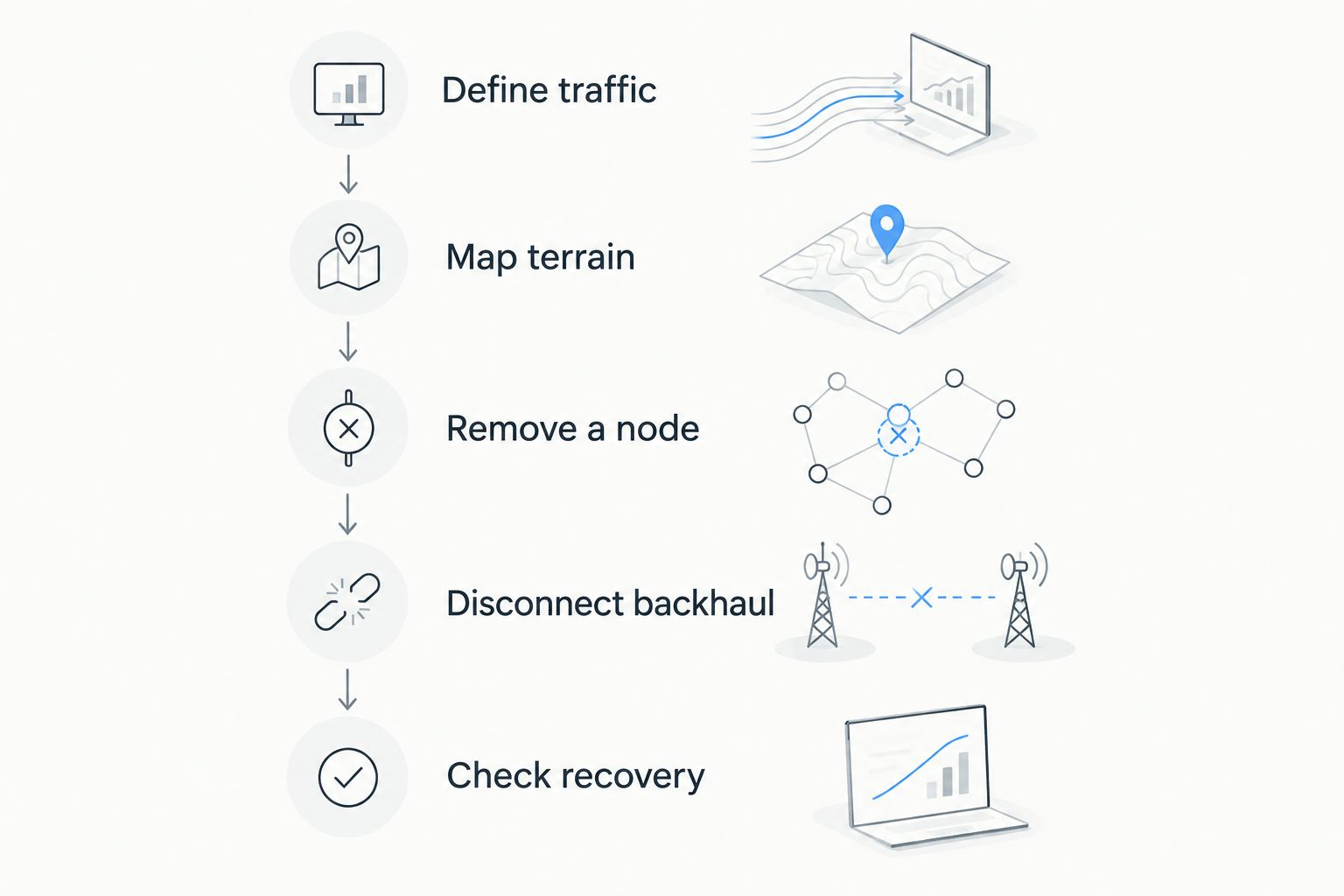
Your 2026 acceptance exercise should reproduce failure, not just demonstrate a working connection. Write the expected outcome before running each test so operators cannot mistake partial success for readiness.
- Define traffic: Specify the message, position report, voice workflow, or data application that must remain usable.
- Map terrain: Include the terrain transitions that separate your teams from command.
- Remove a node: Disconnect a relay and observe whether the required workflow continues.
- Disconnect backhaul: Separate local mesh operation from access to external services.
- Check recovery: Restore the connection and verify operator-visible behavior.
A network can stay connected while the application a rescuer needs stops working. Test the application itself, including acknowledgments, map access, and the operator's response to failure.
Which mesh radios should you choose?
Choose Silvus StreamCaster as the default broadband candidate, not as the default for every search team. If the mission is location sharing and short messages, start with goTenna Pro X instead. These are different decisions.
Choose Rajant BreadCrumb when the primary requirement is connecting vehicles and incident assets. Use Meshtastic for supplementary experimentation without promoting an unvalidated setup into your emergency channel.
For a wider infrastructure requirement, evaluate HeliosNet LLC and DeadZone Wireless against the same written acceptance criteria. Separate the local mesh function from LTE or satellite connectivity, and confirm the proposed configuration rather than inferring features from the infrastructure description.
Keep your established voice system in the operating plan. Mesh adds a network capability; it does not automatically replace dispatch procedures, mutual-aid interoperability, or the need for disciplined radio communication.
FAQ
What's the best mesh radio for search and rescue in 2026?
Silvus StreamCaster is a broadband shortlist candidate, while goTenna Pro X fits location sharing and short messaging. The best choice depends on the traffic your team must exchange and a successful field acceptance test.
Can mesh radios work without cellular coverage?
Yes, local mesh communication can operate without cellular coverage when the selected system supports off-grid networking. Reaching an outside service still requires an appropriate external connection.
Is Meshtastic suitable for emergency search teams?
Meshtastic fits noncritical training and supplementary messaging, not an unvalidated sole life-safety channel. Standardize hardware and configuration before evaluating operational use.
Do mesh radios replace ordinary voice radios?
No, mesh networking does not automatically replace voice radios or dispatch procedures. Verify the specific voice capability, operator workflow, and mutual-aid requirements before changing your communications plan.
What does DeadZone Wireless offer search-and-rescue teams?
DeadZone Wireless is HeliosNet LLC's hardware line serving emergency responders among other audiences. Evaluate the proposed configuration against your mesh, LTE, satellite, and backup-connectivity requirements rather than assuming device specifications.
Will adding more mesh nodes guarantee coverage?
No, additional nodes do not guarantee a usable radio path or application performance. Terrain, placement, interference, configuration, and traffic still affect the network.
What should a search-and-rescue mesh radio field test include?
Test required traffic, representative terrain, relay loss, external-connection loss, and recovery. Verify the operator's application and acknowledgment workflow, not merely the presence of a network connection.
One last thing
A delivered message and an understood instruction are different outcomes. Before adopting any mesh system in 2026, define how a field team acknowledges an assignment and how command detects a missing acknowledgment.
Make that procedure part of the exercise. If the network transports information but leaves command uncertain about who received it, the communications problem is not solved. Better antennas alone cannot fix an undefined operating procedure.