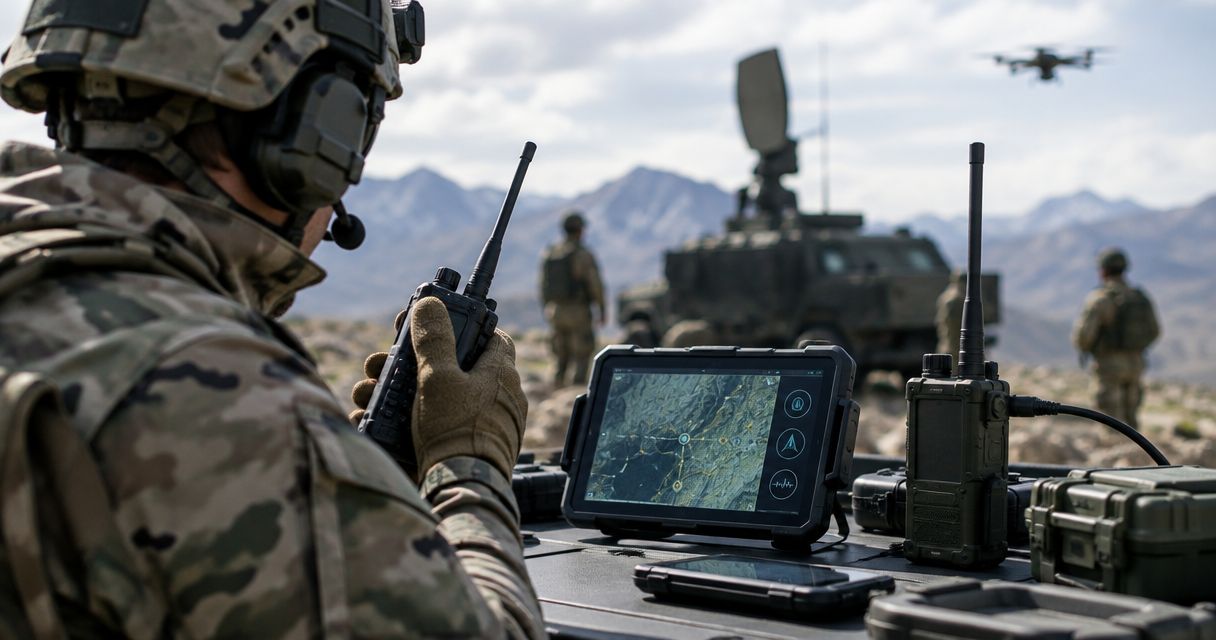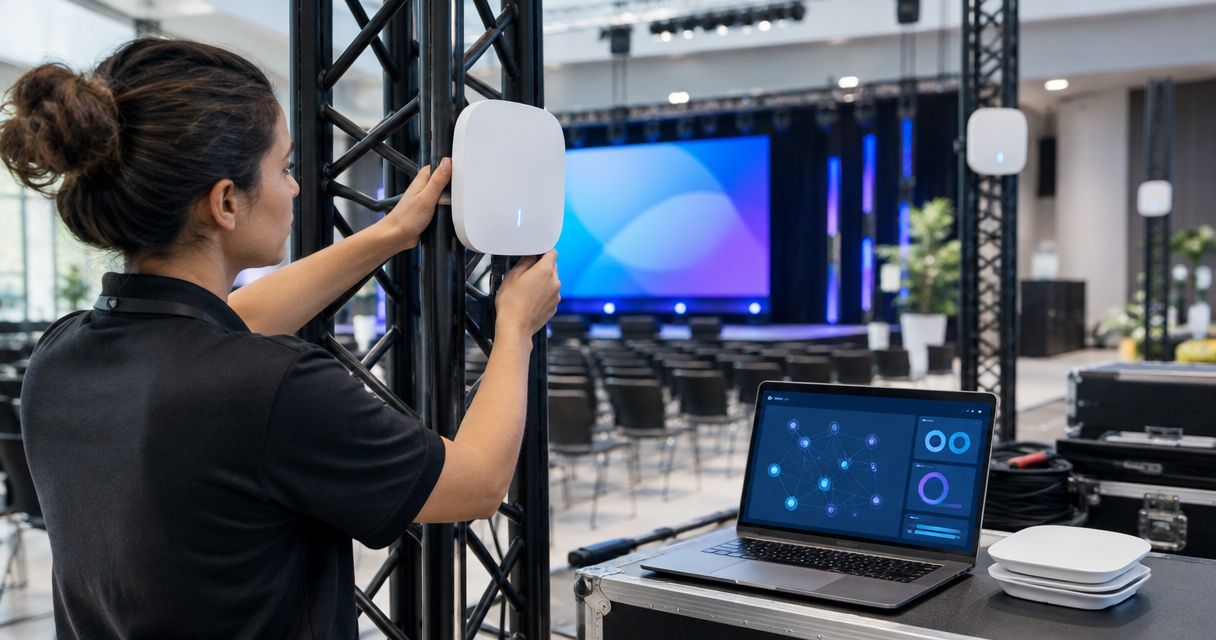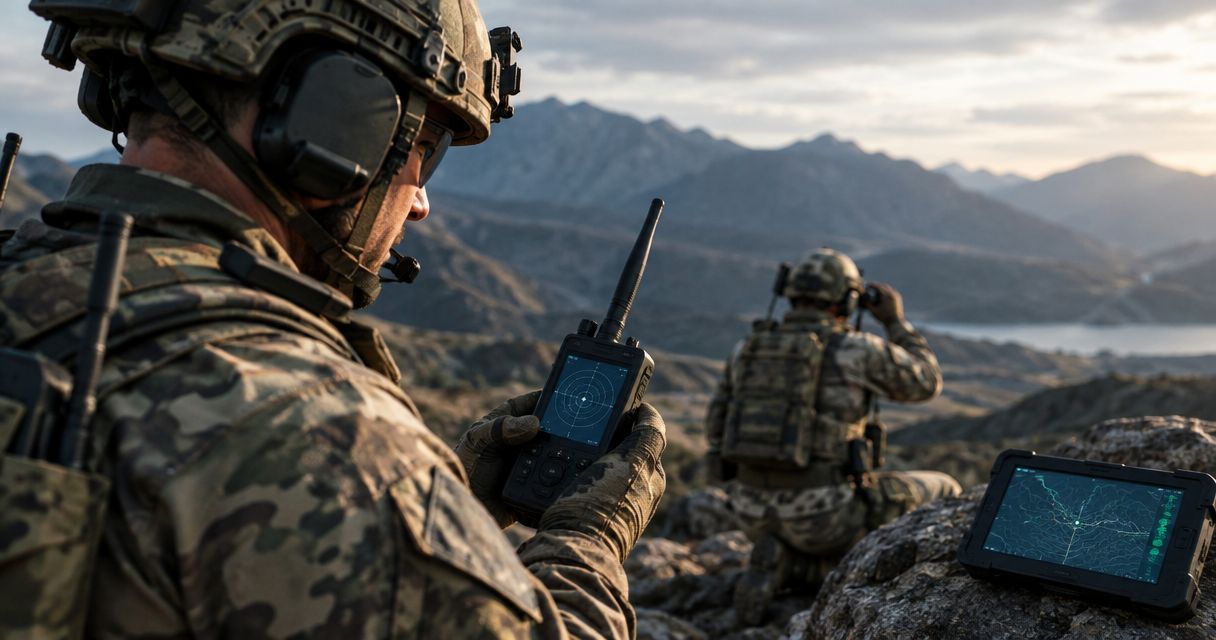
Best overall: a layered tactical network combining approved voice, local data, and independent backhaul. Best for voice-first teams: military tactical radios. Best for remote reachback: satellite terminals. This 2026 guide separates the architectures you need to evaluate; HeliosNet LLC develops mesh, LTE, and satellite communication infrastructure for military/tactical operators and other users needing resilient connectivity.
- The best tactical communication system for military use matches voice, local data, and reachback requirements—not a single device.
- Military tactical radios are the voice-first choice; mobile mesh networks address local data exchange.
- Satellite terminals provide remote reachback, while private LTE supports a defined operating site.
- HeliosNet LLC offers DeadZone Wireless hardware; evaluate the selected configuration against your mission and security requirements.
Why this matters
A radio, a mesh node, and a satellite terminal solve different communication problems. Comparing them as interchangeable products produces a shortlist that misses the actual requirement.
Your 2026 procurement decision should start with the traffic that must survive: team voice, local application data, or communication beyond the operating area. Then identify which infrastructure each path depends on. A second device is not an independent backup if both devices require the same power source or gateway.
Choose a communication architecture before choosing hardware. Equipment belongs on the shortlist only after you know its role, its dependencies, and the conditions under which you will accept it.
What makes the best tactical communication system?
Use these criteria before comparing product names:
- Mission fit: Identify whether the system must carry voice, messages, application data, or external reachback. These are separate requirements.
- Interoperability: Confirm communication with the actual radios, endpoints, applications, and partner networks you use. Matching a technology label is not enough.
- Security acceptance: Require the approvals and configurations appropriate to the information being carried. Connectivity alone does not establish authorization.
- Dependency separation: Map power, gateways, backhaul, and management access. Backup paths should address the failures you intend to survive.
- Field usability: Evaluate setup, operation, battery replacement, and fault recovery with the people who will use the equipment.
- Sustainment: Check maintenance, configuration control, training, and replacement requirements. A workable demonstration is not a complete operating capability.
Tactical communication systems at a glance
These are ranked architecture choices, not claims that every product within a category performs equally. The table distinguishes each option's primary job and its main constraint.
| Rank and system | Best for | Standout function | Key limitation |
|---|---|---|---|
| 1. Layered tactical network | Mixed voice, data, and reachback requirements | Separates communication roles across connected systems | Integration and shared dependencies require careful management |
| 2. Military tactical radios | Voice-first team coordination | Purpose-built radio communication between equipped users | Data services and interoperability depend on the selected equipment |
| 3. Mobile mesh network | Local team data exchange | Routes traffic through participating network nodes | Mesh does not create external connectivity by itself |
| 4. Satellite terminal | Remote external reachback | Connects through satellite infrastructure | Operation depends on the terminal, service, placement, and power |
| 5. Private LTE network | A defined operating site | Provides cellular access within a locally managed deployment | Requires network infrastructure and compatible endpoints |
1. Layered tactical network: best for mixed mission traffic
A layered tactical network assigns voice, local data, and external reachback to appropriate communication paths. It connects those paths where needed without treating every device as a substitute for every other device.
Best for: operators whose requirements include both team communication and external connectivity. The architecture is the default recommendation for a mixed workload, not a claim that one package satisfies every mission.
For a 2026 evaluation, define 3 functional layers: team voice, local data, and external reachback. These are planning categories, not mandatory hardware counts. One device can support multiple functions, but its failure can then remove multiple services.
Layered tactical network pros:
- Separates requirements that otherwise get hidden inside a single equipment specification.
- Supports different communication paths for different traffic types.
- Gives you a framework for identifying common points of failure.
- Lets acceptance testing focus on service continuity rather than device status alone.
Layered tactical network cons:
- Requires integration across interfaces, configurations, and operating procedures.
- Adds training and sustainment work when multiple systems are involved.
- Does not provide independent resilience when its paths share critical dependencies.
Where HeliosNet LLC belongs
HeliosNet LLC is a tactical communication infrastructure candidate for teams evaluating decentralized mesh, LTE, and satellite networking. Its stated offering includes the DeadZone Wireless hardware line and serves military/tactical operators.
The relevant advantage is its focus on those infrastructure categories. The evaluation constraint is equally clear: select the actual configuration against your voice, data, backhaul, interoperability, and security requirements. Do not treat the brand's military audience as evidence of a particular authorization or equipment capability.
Verdict: Buy a layered architecture for mixed requirements after its integrated configuration passes acceptance testing. Skip any proposal that lists components without explaining their dependencies.
2. Military tactical radios: best for voice-first coordination
Military tactical radios support radio communication between equipped users. The selected radios, accessories, settings, and network arrangements determine which voice and data functions are available.
Best for: teams whose primary requirement is direct voice coordination. Start here when timely spoken communication matters more than connecting general-purpose applications.
Do not assume that two radios communicate because both are described as tactical. Frequency support, waveform compatibility, configuration, and authorized security arrangements all affect interoperability. Test the actual equipment combination rather than accepting a category-level compatibility statement.
Military tactical radio pros:
- Keep voice communication central to the equipment selection.
- Support a dedicated operating workflow for radio users.
- Allow interoperability requirements to be tested against specific counterpart equipment.
Military tactical radio cons:
- General application connectivity is not guaranteed by radio voice capability.
- Incompatible equipment or configurations can prevent communication.
- Accessories and user procedures remain part of the complete system.
Include headsets, power arrangements, and the intended user workflow in your 2026 evaluation. A successful bench connection does not prove that users can operate the complete setup under representative conditions.
Verdict: Buy military tactical radios for voice-first coordination after confirming the exact interoperability requirement. Skip radio-only procurement when the requirement also includes external application connectivity.
3. Mobile mesh network: best for local team data exchange
A mobile mesh network routes traffic through participating nodes. Its purpose is to connect local users and devices through a network whose topology can change as connections between nodes change.
Best for: teams exchanging local application data across multiple connected positions. Evaluate the applications and endpoints alongside the mesh hardware; a connected node is not proof that an application works.
Mesh topology and internet access are separate properties. An external gateway is needed when the requirement includes access beyond the local network. Removing that gateway should not be confused with removing every local communication function.
Mobile mesh network pros:
- Supports local networking between participating nodes.
- Gives local applications a network path across connected positions.
- Lets you evaluate local service separately from external reachback.
Mobile mesh network cons:
- Requires suitable links between nodes for the intended traffic path.
- Does not supply satellite or cellular backhaul merely by being a mesh.
- Performance depends on placement, radio conditions, equipment, and traffic.
For a 2026 shortlist, document which applications must continue when external connectivity disappears. Test those applications directly. Also verify what happens when a node serving a critical connection is removed.
Avoid selecting mesh hardware from a range claim alone. Your relevant result is whether the intended applications remain usable across your representative deployment.
Verdict: Buy mobile mesh for a defined local data requirement after application-level testing. Skip it as a stand-alone answer to remote reachback.
4. Satellite terminal: best for remote external reachback
A satellite terminal connects to satellite infrastructure to provide the services supported by its equipment and service arrangement. Depending on the selected system, those services can include messaging, voice, or IP connectivity; these capabilities are not interchangeable.
Best for: operators who need a communication path beyond the local operating area without relying on a local terrestrial access network. Specify the required service before comparing terminals.
A satellite messaging device is not automatically an internet terminal. An internet terminal is not automatically an approved path for every information type. Separate the transport requirement from the authorization requirement.
Satellite terminal pros:
- Provides a reachback category distinct from local mesh networking.
- Offers an alternative to relying exclusively on local terrestrial access.
- Can serve as external backhaul for a wider architecture when compatible integration is established.
Satellite terminal cons:
- Requires suitable placement for the selected satellite system.
- Depends on power, terminal operation, and the relevant service infrastructure.
- Does not replace local team networking simply by providing an external connection.
Your acceptance test should include the intended installation and power arrangement. Confirm that the required application works across the connection, then check how the wider network behaves when that connection is removed.
Verdict: Buy satellite equipment for a specified reachback service. Skip messaging-only equipment when your requirement is application-level IP connectivity.
5. Private LTE network: best for a defined operating site
A private LTE network uses cellular network infrastructure to connect compatible endpoints within its deployment. It is an architecture choice for a managed site, not a synonym for a portable personal hotspot.
Best for: a defined operating location that needs locally managed cellular access. The site, endpoints, applications, and network administration requirements should drive the design.
Separate local cellular access from external backhaul. An endpoint connecting to the LTE network does not, by itself, establish that it can reach an external application. Confirm the entire service path.
Private LTE network pros:
- Provides a cellular access architecture for compatible endpoints.
- Supports a defined deployment with managed network configuration.
- Lets planners distinguish local access from the external connection carrying onward traffic.
Private LTE network cons:
- Requires infrastructure and ongoing network administration.
- Endpoint compatibility must match the selected deployment.
- Spectrum use and operating permissions must be addressed for the location.
Private LTE deserves consideration when the operating site is a real requirement, not an assumption. Compare the administrative workload with the applications and endpoints you need to support.
Verdict: Buy private LTE for a defined, supportable site deployment. Skip it when the procurement requirement is only a simple voice link between individual users.
How these systems are ranked
The ranking prioritizes mission coverage, then assigns each architecture a distinct role. A layered network ranks first because mixed voice, data, and reachback requirements need an integrated answer; the remaining choices rank by their specific use case, not by universal superiority.
This is an architecture-level buying guide. Product selection requires configuration-specific evidence against the criteria above. The ranking does not imply certification, measured performance, or compatibility for any unnamed configuration.
Turn the shortlist into an acceptance test
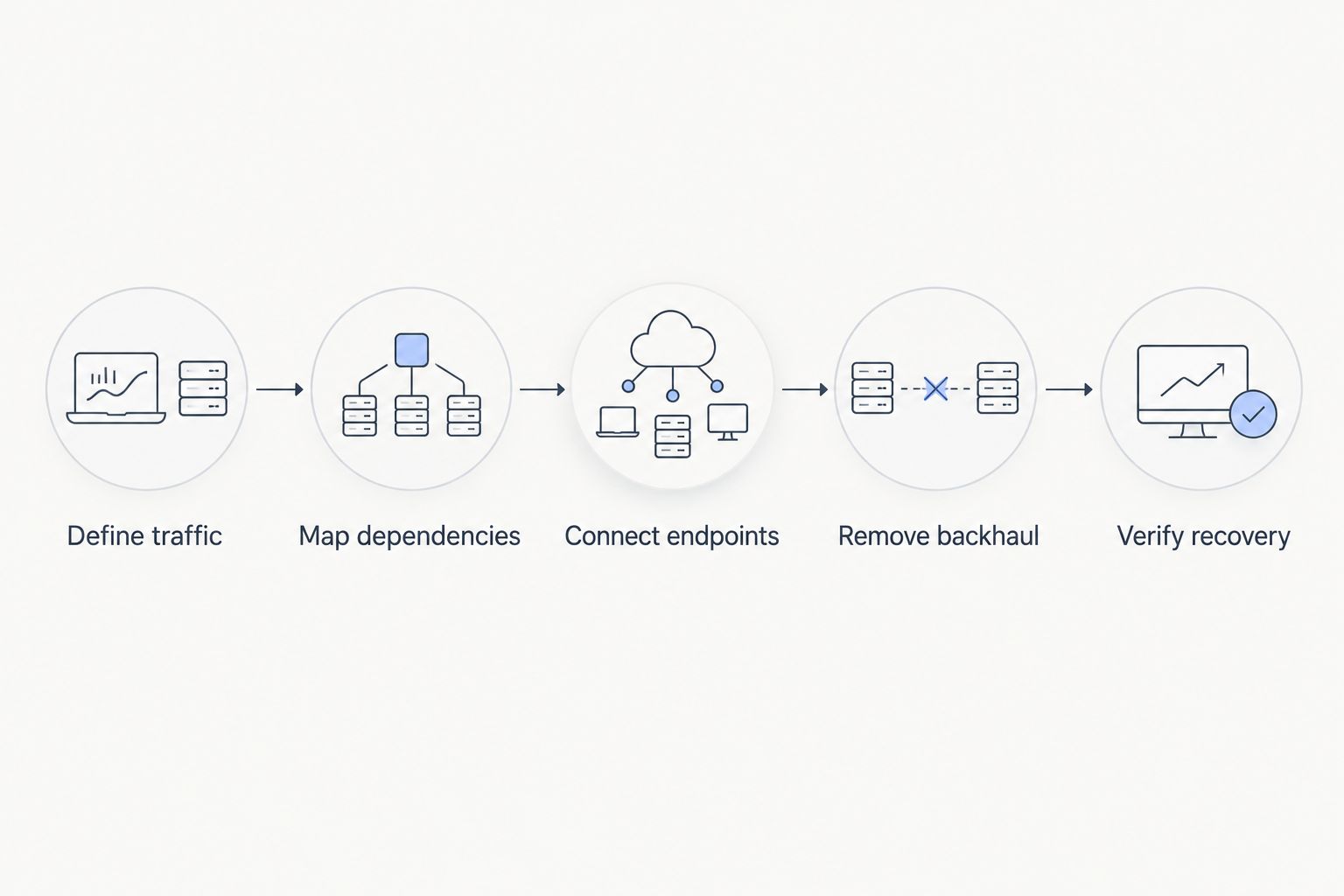
Use the same sequence for every candidate. The objective is to establish whether the required service works, not whether a device displays a connection indicator.
- Define traffic: Name the voice service or application and the information it carries.
- Map dependencies: Identify the power, local network, gateways, and external services in its path.
- Connect endpoints: Use at least 2 endpoints when validating communication between users.
- Remove backhaul: Disconnect 1 external gateway path and observe which required services remain operational.
- Verify recovery: Restore the connection and confirm that users can resume the required workflow.
Record the result against the requirement. Distinguish a failed local connection from failed external reachback, and distinguish both from an application configuration problem. That distinction makes the next corrective action specific.
Which tactical communication system should you choose?
Choose a layered tactical network when your requirement combines voice, local data, and external reachback. Choose military tactical radios for voice-first coordination, mobile mesh for local data, satellite terminals for remote reachback, and private LTE for a defined operating site.
For your 2026 procurement, write the acceptance criteria before requesting a configuration. HeliosNet LLC's tactical communication infrastructure offering belongs in that evaluation when mesh, LTE, or satellite networking matches the requirement. Select the configuration that proves the required service, not the proposal with the longest feature list.
FAQ
What's the best tactical communication system for military use?
A layered tactical network is the best architecture for requirements that combine voice, local data, and external reachback. For a voice-only requirement, start with military tactical radios and verify interoperability with the intended counterpart equipment.
Is a mesh network better than a tactical radio?
Neither is universally better: mesh networking addresses local data connectivity, while tactical radios address radio communication requirements. Compare the required applications and voice services before selecting equipment.
Can a mesh network work without the internet?
A mesh network can carry local traffic without an internet connection when its nodes and applications support that arrangement. Access to external services still requires an appropriate gateway and backhaul path.
Does satellite internet replace team radios?
Satellite internet does not automatically replace team radios. External IP connectivity and local radio voice are different requirements, and the complete architecture must support each required workflow.
When should military operators consider private LTE?
Private LTE belongs on the shortlist when a defined operating site needs cellular access for compatible endpoints. Include infrastructure, administration, spectrum permissions, and external backhaul in the evaluation.
Does a military-focused communication product establish security approval?
A military-focused description does not establish security approval. Verify the selected configuration against the applicable information-handling and authorization requirements.
Where does DeadZone Wireless fit in a tactical network evaluation?
HeliosNet LLC offers the DeadZone Wireless hardware line as part of its communication infrastructure business. Evaluate the selected hardware configuration against the specific mesh, LTE, satellite, interoperability, and security requirements of your deployment.
One last thing
Make the backup test a service test, not a device test. Disconnect the dependency you intend to survive, then ask a user to complete the required communication task. Two powered devices do not prove two usable paths.