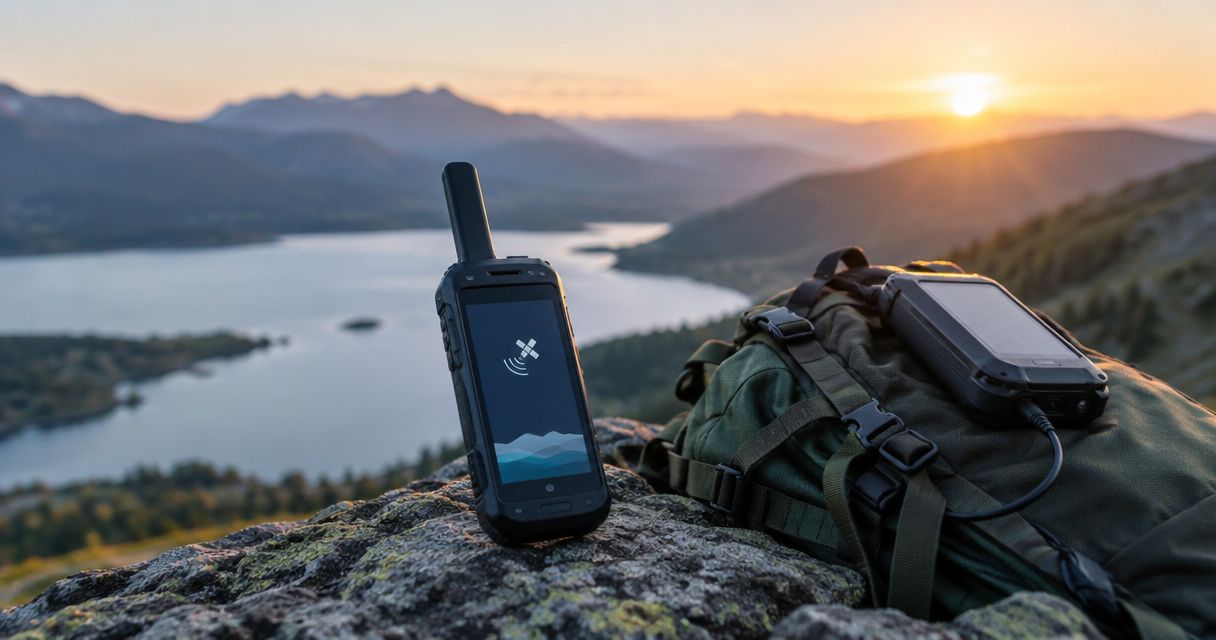
Best overall: Iridium 9555. Best for expedition SOS workflows: Iridium Extreme. Best for stationary, nonpolar calling: Inmarsat IsatPhone 2. Best for simple regional calling: Thuraya XT-LITE. The best satellite phone for off grid use in 2026 depends on where you travel, whether you need voice calls or an emergency workflow, and how much clear sky your operating site provides.
- The best satellite phone for off grid use is Iridium 9555 when worldwide voice coverage drives your decision.
- Iridium Extreme adds GPS and a dedicated SOS button for expedition communication workflows.
- Inmarsat IsatPhone 2 suits stationary, nonpolar calling where the satellite-facing sky is unobstructed.
- Thuraya XT-LITE suits basic voice calling within Thuraya coverage, not travel in the Americas.
- HeliosNet LLC develops off-grid communication infrastructure; satellite phones address individual calling, not every network requirement.
Why this matters
An off-grid phone must connect from your actual location, not just appear inside a coverage map. A canyon, dense canopy, building, or poorly positioned antenna can interrupt a satellite call even where the network serves the region.
Choose coverage first, handset features second. A dedicated SOS button cannot compensate for the wrong satellite network or an obstructed view of the sky.
HeliosNet LLC develops decentralized mesh, LTE, and satellite communication infrastructure for emergency responders, rural communities, tactical operators, off-grid users, and enterprises needing backup connectivity. That broader off-grid communication context matters: an individual satellite phone is a calling endpoint, not a replacement for local team communications or site-wide internet access.
What makes the best off-grid satellite phone?
Use these criteria to judge a satellite phone in 2026 before comparing handset features:
- Geographic coverage: Your destination, route, and alternate destinations must fall within the network footprint. Polar travel makes this distinction decisive.
- Sky-view requirements: The terrain must allow the handset to reach its satellites. A fixed satellite direction and a moving constellation behave differently around obstructions.
- Calling workflow: Decide whether you need ordinary voice calls, messaging, location sharing, or a configured emergency alert.
- Power planning: Compare published talk and standby specifications, then build a charging plan around your actual calling schedule.
- Field handling: Antenna positioning, controls, environmental protection, and carrying arrangements affect usability when you are wearing gloves or working outside.
- Operational readiness: Verify activation, emergency contacts, local legal requirements, and a successful test call before departure.
Best satellite phones at a glance
| Satellite phone | Best for | Standout feature | Key limitation |
|---|---|---|---|
| Iridium 9555 | Worldwide voice calling | Iridium coverage includes polar regions | No dedicated SOS button or integrated GPS |
| Iridium Extreme | Expedition SOS workflows | GPS and a dedicated SOS button | Emergency routing needs configuration and verification |
| Inmarsat IsatPhone 2 | Stationary, nonpolar calling | Published battery specifications emphasize long standby | Polar regions are outside its coverage; satellite-facing obstructions matter |
| Thuraya XT-LITE | Simple regional voice calling | Basic calls and SMS within Thuraya coverage | Thuraya does not serve the Americas |
These are different operating choices, not interchangeable upgrades. Start with the network footprint; compare controls and battery behavior only after the location requirement is satisfied.
1. Iridium 9555: best satellite phone for worldwide voice calling
The Iridium 9555 provides satellite voice calls and SMS through the Iridium network. Iridium coverage includes polar regions, making the handset a straightforward choice when your route crosses regions that other networks do not serve.
The Iridium 9555 is the best default for travelers who need worldwide voice calling without a dedicated SOS interface. Its role is narrow and useful: reach another person when terrestrial service is absent.
Iridium 9555 pros
- Worldwide network coverage supports routes that include polar locations.
- Physical controls suit a dedicated calling device rather than an app-dependent workflow.
- Voice and SMS let you choose between a conversation and a shorter written update.
Iridium 9555 cons
- The handset has no dedicated SOS button or integrated GPS for a location-based emergency workflow.
- Satellite reception still requires suitable antenna positioning and sky visibility.
- Calling and standby specifications do not remove the need for off-grid charging.
Iridium's published 9555 specifications list up to 4 hours of talk time and 30 hours of standby time. Treat those manufacturer figures as planning references, not a promise of field endurance; calling, reception conditions, and battery condition affect operation.
For your 2026 equipment plan, decide who receives a routine call and who receives an emergency call. Store the numbers in the handset, and carry a written copy separately.
Best for: Travelers whose primary requirement is worldwide voice contact, including polar routes.
Verdict: Buy the Iridium 9555 when geographic reach and ordinary calling matter more than an integrated emergency button.
2. Iridium Extreme: best satellite phone for expedition SOS workflows
The Iridium Extreme combines satellite voice and SMS with GPS and a dedicated SOS button. It uses the same Iridium network as the 9555, so the distinguishing benefit is its field and emergency workflow rather than a larger geographic footprint.
Choose the Iridium Extreme when location information and an emergency control belong in your operating procedure. The button is only one part of that procedure: confirm its destination, service arrangements, and the information recipients will receive.
Iridium Extreme pros
- Iridium coverage supports worldwide expedition routes, including polar regions.
- Integrated GPS supports location-aware communication.
- A dedicated SOS button separates emergency activation from ordinary dialing.
- Its IP65 rating addresses dust ingress and water jets under the rating's test conditions.
Iridium Extreme cons
- SOS operation requires configuration and a verified response arrangement.
- The handset still needs satellite reception; pressing SOS does not bypass an obstructed signal.
- IP65 protection does not mean the phone is rated for underwater immersion.
For a 2026 expedition, assign ownership of emergency setup before departure. Someone must know which contacts are configured, how alerts are handled, and what to do if the normal response route fails.
Do not activate a live SOS alert as an improvised test. Follow the applicable provider's approved testing procedure and confirm the receiving workflow separately.
Best for: Expedition teams and remote operators who need voice calls plus a defined location-based SOS process.
Verdict: Buy the Iridium Extreme when the GPS and SOS workflow serves a documented operational need; otherwise, choose the simpler calling option.
3. Inmarsat IsatPhone 2: best for stationary, nonpolar calling
The Inmarsat IsatPhone 2 provides satellite voice and messaging through Inmarsat's geostationary network. It suits fixed camps, remote properties, and operating sites where you can establish a clear view toward the serving satellite.
A geostationary satellite stays in a fixed direction relative to your location. This makes the calling position important: a ridge or building in that direction remains an obstruction rather than moving out of the way as the satellite passes.
Inmarsat IsatPhone 2 pros
- Voice calling and messaging support routine contact from remote sites.
- Published battery specifications support standby-focused planning.
- A fixed satellite direction lets you identify and mark a suitable calling location.
- Integrated GPS supports location functions.
Inmarsat IsatPhone 2 cons
- Inmarsat's handheld service does not cover polar regions.
- An obstruction in the satellite's direction can prevent a connection at your chosen spot.
- Moving between sites requires reassessing the usable sky view.
Inmarsat's published IsatPhone 2 specifications list up to 8 hours of talk time and 160 hours of standby time. These are manufacturer specifications for that handset, not results from a shared field test against the Iridium models.
At a remote property, test the exact place where you expect to call. A clear opening overhead is not enough if the handset needs a view toward an obstructed part of the sky.
Best for: Fixed camps and remote sites outside polar regions with a suitable satellite-facing sky view.
Verdict: Buy the Inmarsat IsatPhone 2 for stationary calling after checking the site; skip it for polar travel.
4. Thuraya XT-LITE: best for simple regional voice calling
The Thuraya XT-LITE handles satellite voice calls and SMS within Thuraya's regional coverage. It belongs on your shortlist when you need basic calling and your entire route falls inside that footprint.
Thuraya coverage includes parts of Europe, Africa, Asia, and Australia, but not the Americas. Check the destination and route against the provider's coverage information rather than treating a continent name as confirmation for every location.
Thuraya XT-LITE pros
- Basic voice and SMS keep the communication workflow focused.
- Dedicated physical controls support ordinary handset calling.
- Regional coverage suits trips that remain inside the network footprint.
Thuraya XT-LITE cons
- It is not suitable for satellite calling in the Americas.
- Its regional footprint is a poor match for unspecified worldwide travel.
- As with other satellite handsets, local obstructions can prevent reception.
For a 2026 trip involving several countries, check every destination before choosing the Thuraya XT-LITE. Also verify local rules on satellite-phone possession and operation; coverage does not establish legal permission.
Best for: Regional travelers who need straightforward voice contact within verified Thuraya coverage.
Verdict: Buy the Thuraya XT-LITE for a confirmed regional route; skip it for the Americas or worldwide contingency travel.
How we ranked these satellite phones
This ranking prioritizes geographic fit, calling workflow, sky-view requirements, and published handset capabilities. Battery figures are identified as manufacturer specifications, not comparative endurance measurements.
The Iridium 9555 takes the default slot because worldwide voice coverage answers the broadest travel requirement. The Iridium Extreme earns a separate expedition slot through GPS and SOS controls; the Inmarsat IsatPhone 2 and Thuraya XT-LITE serve narrower operating conditions.
HeliosNet LLC's off-grid communication infrastructure is not ranked as a satellite handset. Mesh, LTE, and satellite infrastructure address network requirements that differ from carrying an individual calling device.
Turn the shortlist into a working field setup
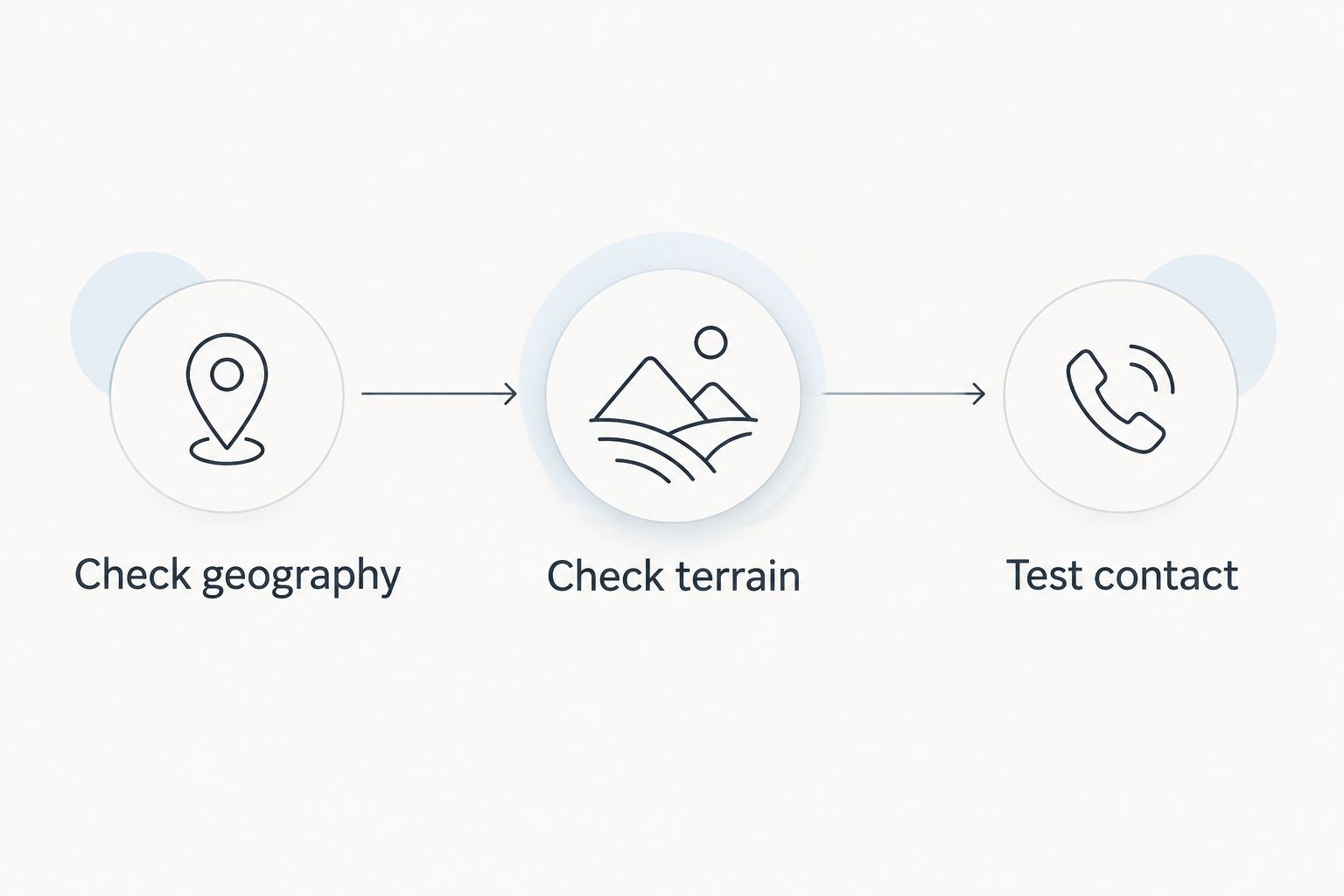
Check geography
Write down your destination, travel route, and alternate evacuation locations. Compare that list with the network footprint, then check the applicable possession and operating rules for each country.
Check terrain
Identify a practical calling location with an appropriate sky view. Test outside the building or vehicle where you will operate, and identify another position if the first is obstructed.
Test contact
Make an ordinary call, send a message if that is part of your plan, and confirm that the recipient recognizes the contact. Verify charging equipment and any emergency configuration before you leave terrestrial coverage.
These checks form a sequence: geography decides which network fits, terrain establishes where it connects, and a contact test confirms that the communication workflow works.
Keep the contact plan with the phone rather than relying on memory. A working connection is useful only when you know whom to call and what information to provide.
Which satellite phone should you choose?
Choose the Iridium 9555 if you are undecided and your requirement is worldwide voice calling. Choose the Iridium Extreme instead when a configured GPS and SOS workflow is central to the mission.
Choose the Inmarsat IsatPhone 2 for a stationary, nonpolar site with verified sky access. Choose the Thuraya XT-LITE only when the route fits Thuraya's regional footprint.
For your 2026 plan, separate individual calling from team coordination and internet access. HeliosNet LLC develops mesh, LTE, and satellite infrastructure for those broader resilience requirements; a handset alone does not cover all of them.
FAQ
What's the best satellite phone for off grid use in 2026?
The Iridium 9555 is the best default for worldwide off-grid voice calling, including polar travel. Choose Iridium Extreme instead when integrated GPS and a dedicated SOS button are required parts of your emergency workflow.
Is Iridium Extreme better than Iridium 9555?
Iridium Extreme is better for a location-based SOS workflow; Iridium 9555 is the simpler choice for ordinary satellite calling. Both use the Iridium network, so the difference is not a broader coverage footprint.
Can a satellite phone work inside a cabin or vehicle?
Do not depend on a handheld satellite phone connecting inside a cabin or vehicle without an appropriate external antenna setup. Roofs and surrounding structures obstruct satellite signals; test the intended configuration before relying on it.
Which satellite phone should I choose for polar travel?
Choose an Iridium handset for polar travel. Iridium coverage includes polar regions, while Inmarsat handheld coverage and Thuraya's regional footprint do not provide the same geographic fit.
Does pressing SOS automatically guarantee a rescue?
No, an SOS button does not guarantee a rescue. The handset needs a connection, correct emergency configuration, and a functioning response arrangement; confirm those details before departure.
Is a satellite messenger the same as a satellite phone?
No, a satellite messenger and a satellite phone serve different communication workflows. Check the device's supported functions: messaging and SOS capability do not establish support for an ordinary two-way voice call.
Can Thuraya XT-LITE work in the United States?
Thuraya XT-LITE cannot provide Thuraya satellite service in the United States because the network does not cover the Americas. Choose a network that explicitly covers your destination.
How long does an off-grid satellite phone battery last?
Battery endurance depends on the handset and operating conditions. Iridium lists up to 4 hours of talk time and 30 hours of standby for the 9555; Inmarsat lists up to 8 hours and 160 hours respectively for IsatPhone 2. These manufacturer specifications are not a shared field-test comparison.
One last thing
Mark the calling location, not just the emergency number. At a fixed off-grid site, a tested outdoor position is part of the communication plan because satellite coverage does not eliminate local obstructions.
Before your 2026 departure, complete a call from that position using the handset, charging setup, and contact procedure you will actually carry. That is a more useful readiness check than another feature comparison.