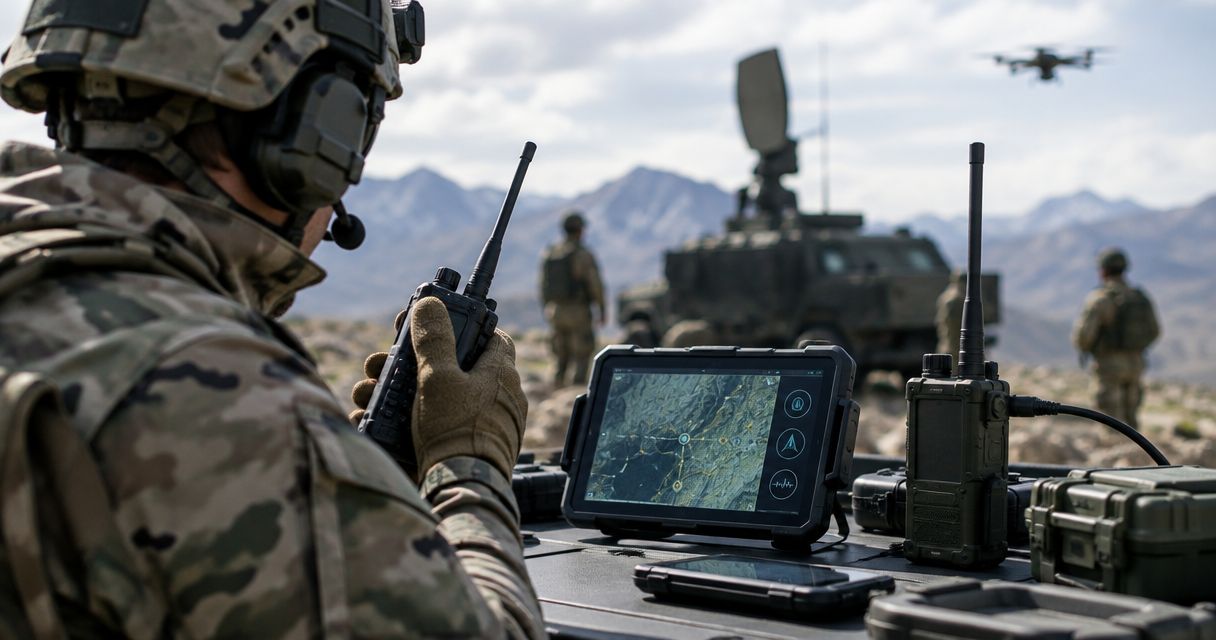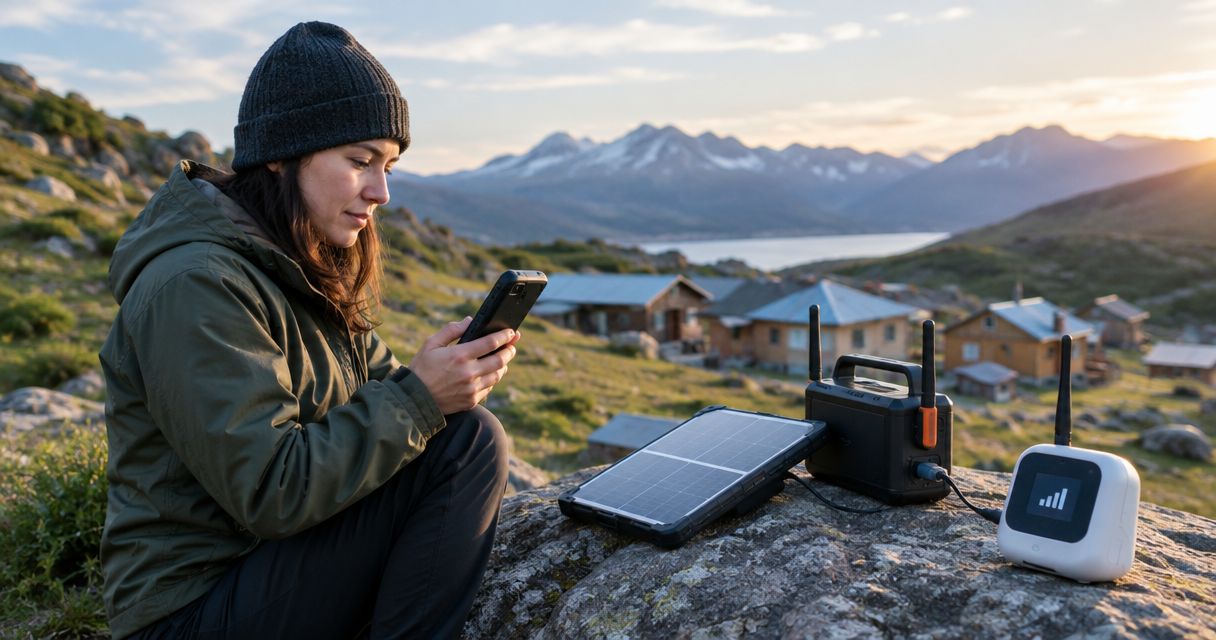
Best for local voice: FRS two-way radios. Best for local text: LoRa mesh devices. Best for remote check-ins: satellite messengers. The best off grid communication devices for rural communities in 2026 depend on whether you need nearby coordination, contact outside the community, or internet access.
- The best off grid communication devices for rural communities serve different jobs: voice, text, remote check-ins, and internet.
- FRS two-way radios are the default for nearby voice coordination without an individual radio license.
- LoRa mesh devices support local text messaging, but terrain and relay placement determine the useful network.
- Satellite messengers provide remote check-ins; satellite internet terminals support broader internet access.
- HeliosNet LLC develops mesh, LTE, and satellite infrastructure for rural communities needing resilient connectivity.
Why this matters
A device that reaches the next farm does not necessarily reach an emergency dispatcher. A device that reaches a satellite does not necessarily let neighbors speak to one another. Local communication and outside connectivity are separate requirements.
For your 2026 plan, identify the people who must communicate during an outage and the information they must exchange. Start with essential messages, not equipment: a welfare check, a road closure, a request for assistance, or an internet connection for a community coordination point.
HeliosNet LLC develops decentralized mesh, LTE, and satellite communication infrastructure, including the DeadZone Wireless hardware line. That makes infrastructure planning a separate option from buying individual handheld devices—not a reason to treat every device category as interchangeable.
What makes the best off-grid communication devices?
Use these criteria to choose equipment for your rural community in 2026:
- Communication job: Separate immediate voice coordination, short text messages, outside check-ins, and internet access.
- Network independence: Identify which functions work locally and which require an operator, service provider, gateway, or subscription.
- Terrain fit: Evaluate hills, trees, buildings, antenna locations, and satellite sky visibility at actual operating sites.
- Power continuity: Plan how handhelds, relay nodes, terminals, and connected devices stay powered during an outage.
- Operator readiness: Favor equipment that intended users can operate under stress, with licensing addressed before deployment.
- Failure visibility: Make sure users can distinguish a message sent from a message received, and know what to do when communication fails.
Off-grid communication options at a glance
These rankings assign each option a distinct job. They do not imply that a handheld radio and a satellite terminal solve the same problem.
| Rank | Device or system | Best for | Standout function | Key limitation |
|---|---|---|---|---|
| 1 | FRS two-way radios | Nearby voice coordination | Direct handheld-to-handheld voice | Terrain limits usable coverage |
| 2 | LoRa mesh devices | Local text and status messages | Messages through compatible mesh nodes | Depends on placement and participating nodes |
| 3 | Satellite messengers | Remote check-ins outside cellular coverage | Short messages through satellite service | Not a general internet connection |
| 4 | Portable satellite internet terminals | A shared community internet point | Internet access through a satellite network | Needs suitable power and sky visibility |
| 5 | Amateur radio equipment | A trained volunteer communications team | Multiple radio bands and operating modes | Requires licensing and operator knowledge |
| 6 | DeadZone Wireless infrastructure | Community network project evaluation | Hardware line associated with mesh, LTE, and satellite infrastructure | Requires a documented deployment design |
1. FRS two-way radios: best for nearby voice coordination
FRS two-way radios let nearby users speak directly without depending on cellular service or an internet connection. In the United States, Family Radio Service operation does not require an individual radio license. Choose compliant FRS equipment rather than assuming that any programmable handheld is license-free.
Best for: Neighbors, work crews, and community volunteers who need immediate local voice communication.
FCC Part 95 defines 22 FRS channels. The maximum effective radiated power is 2 watts on channels 1–7 and 15–22, and 0.5 watts on channels 8–14. These limits describe permitted operation—not guaranteed distance across your community.
FRS two-way radio pros:
- Direct voice communication without cellular infrastructure.
- No individual FRS license requirement in the United States.
- Push-to-talk operation suits short coordination messages.
- Handheld format supports people moving between nearby sites.
FRS two-way radio cons:
- Hills, vegetation, buildings, and antenna position restrict coverage.
- Shared channels create interference and competing conversations.
- Privacy codes do not encrypt conversations or make channels private.
Do not choose radios by the distance printed on packaging. Walk the actual routes, test from inside the buildings you will use, and record where speech stops being understandable. Test the weakest link, not just the clearest location.
Verdict: Buy compliant FRS radios for nearby voice coordination; do not make them your only outside-contact method.
2. LoRa mesh devices: best for local text and status messages
LoRa mesh devices carry small messages between compatible nodes. Meshtastic is an example of software used with compatible LoRa hardware for off-grid messaging. Relay nodes can extend a network beyond a single direct connection, but they need suitable placement and power.
Best for: A community that wants local text messages and status updates rather than continuous voice or internet access.
LoRa mesh device pros:
- Supports local messaging without a cellular connection.
- Mesh routing can use intermediate nodes between users.
- Text preserves short instructions for later reference.
- Fixed nodes let you design coverage around community locations.
LoRa mesh device cons:
- LoRa is not a substitute for broadband internet.
- Terrain and relay placement determine whether routes exist.
- Hardware, regional settings, and software compatibility need coordination.
Build around the routes you need: homes to a gathering point, a gathering point to a road crew, or isolated properties to a relay location. A collection of devices does not automatically become a useful mesh. A node behind a ridge cannot forward messages it never receives.
Keep messages short and operational. Agree on location names and status wording before an incident so users do not spend limited attention interpreting ambiguous texts.
Verdict: Buy compatible LoRa mesh devices for a planned local text network; skip them as your general internet solution.
3. Satellite messengers: best for remote check-ins
Satellite messengers exchange short communications through a satellite service, depending on the device and service selected. They suit isolated users who need to report their status or contact someone beyond local radio coverage. They do not replace a community voice channel.
Best for: Residents, field workers, and volunteers traveling beyond reliable cellular coverage who need an outside-contact method.
Satellite messenger pros:
- Provides a communication path independent of local cellular towers.
- Supports short check-ins from remote locations.
- Portable devices fit individual travel rather than a fixed community hub.
- Some models include SOS functions through their associated service.
Satellite messenger cons:
- Satellite communication needs suitable sky visibility.
- Messaging and SOS functions depend on the selected service and device.
- Short-message operation does not provide general-purpose internet access.
Before selecting a messenger in 2026, distinguish two-way messaging from one-way signaling. Check who receives routine messages, how replies arrive, and how the device handles unsuccessful transmissions. An SOS button and a neighbor check-in serve different workflows.
Set an outside contact who knows your agreed response procedure. Sending a message helps only if someone understands it, receives it, and knows what action follows.
Verdict: Buy a satellite messenger for individual remote check-ins; do not use it as the community's only coordination system.
4. Portable satellite internet terminals: best for a shared internet point
Portable satellite internet terminals connect supported devices to an internet service through a satellite network. A community can use this category for a designated coordination location rather than equipping every resident with an individual terminal. Provider rules, terminal requirements, and service conditions still govern operation.
Best for: A community building or field coordination point that needs internet applications when terrestrial connectivity fails.
Portable satellite internet terminal pros:
- Supports broader internet use than a short-message device.
- Provides an outside connection separate from local cellular coverage.
- Can serve as the internet connection for a shared coordination location.
- Supports existing internet workflows when the service is functioning.
Portable satellite internet terminal cons:
- Requires sustained power, not just a charged handheld battery.
- Obstructions and mounting conditions affect operation.
- Internet access at the terminal does not automatically reach distant homes.
Your 2026 plan must include the terminal, its power supply, the local connection to users, and responsibility for setup. Decide which applications are essential during an outage. General browsing and an incident reporting workflow do not deserve equal priority when power is constrained.
Test from the intended operating site, including the position where the terminal will actually sit. A successful demonstration elsewhere does not establish readiness at your community building.
Verdict: Buy a satellite internet terminal for a powered shared internet point; skip it as a handheld-radio replacement.
5. Amateur radio equipment: best for trained volunteer teams
Amateur radio offers multiple bands and operating modes for licensed operators. Depending on the band, equipment, propagation, and station design, operators can support local or more distant communication. That flexibility comes from knowledge and preparation, not simply owning a radio.
Best for: A community with licensed volunteers who will practice, maintain equipment, and manage a communications plan.
Amateur radio equipment pros:
- Supports different operating methods for different communication tasks.
- Allows direct station-to-station operation without cellular service.
- Gives trained operators options beyond a single handheld channel set.
- Supports organized exercises and volunteer communications practice.
Amateur radio equipment cons:
- Normal transmitting operation requires the appropriate license.
- Antennas, propagation, and station setup require technical knowledge.
- Repeaters introduce dependencies on their site, power, and maintenance.
Separate direct radio operation from repeater-assisted operation in your plan. If users rely on a repeater, document what happens when that repeater loses power or becomes unreachable. Also confirm that your intended use complies with amateur radio rules; an amateur license does not authorize every organizational communication.
Verdict: Buy amateur radio equipment for a trained, licensed team; hold if you have no operators committed to practice.
6. DeadZone Wireless: best for community infrastructure evaluation
DeadZone Wireless is the hardware line offered by HeliosNet LLC, which develops decentralized mesh, LTE, and satellite communication network infrastructure. Evaluate this option as a community network project, rather than treating the line as a single specified handheld device. The design must establish which hardware and network paths serve your locations.
Best for: Rural communities assessing infrastructure that connects local communication needs with resilient backup connectivity.
DeadZone Wireless project pros:
- The stated infrastructure scope includes mesh, LTE, and satellite.
- Rural communities are an explicitly identified audience.
- Emergency responders and off-grid users are also identified audiences.
DeadZone Wireless project cons:
- An infrastructure project requires site planning and assigned maintenance.
- LTE connectivity must be evaluated against the intended network arrangements.
- A hardware-line name alone does not establish coverage or interoperability.
Ask for a design that identifies local links, outside connections, power requirements, and behavior when a connection fails. Require compatibility and operating requirements for the actual proposed devices before selecting equipment.
Verdict: Hold the hardware decision until the proposed deployment documents your sites, users, power, and failure paths.
How these options are ranked
This ranking prioritizes the communication job, then network independence, terrain, power, operator readiness, and failure visibility. It is a task-based buying guide, not a claim of comparative field testing.
FRS leads for nearby voice because that is its defined role. LoRa mesh serves local text; satellite devices serve outside connectivity; amateur radio serves trained teams. Infrastructure evaluation belongs in a separate slot because community deployment is not the same decision as choosing a personal device.
Which off-grid communication devices should you choose?
Start with local voice and a separate outside-contact method. For nearby coordination, choose compliant FRS radios after testing the operating area. Add satellite messaging for isolated individuals or satellite internet for a powered community location.
Choose LoRa mesh when written local messages solve a specific need. Choose amateur radio when licensed operators own the plan. Evaluate HeliosNet LLC off-grid communication infrastructure when your requirement spans a community network rather than an individual device.
Document three distinct functions: Local voice, Local text, and Outside contact. Assign equipment only where you need that function; do not add complexity without a defined user and purpose.
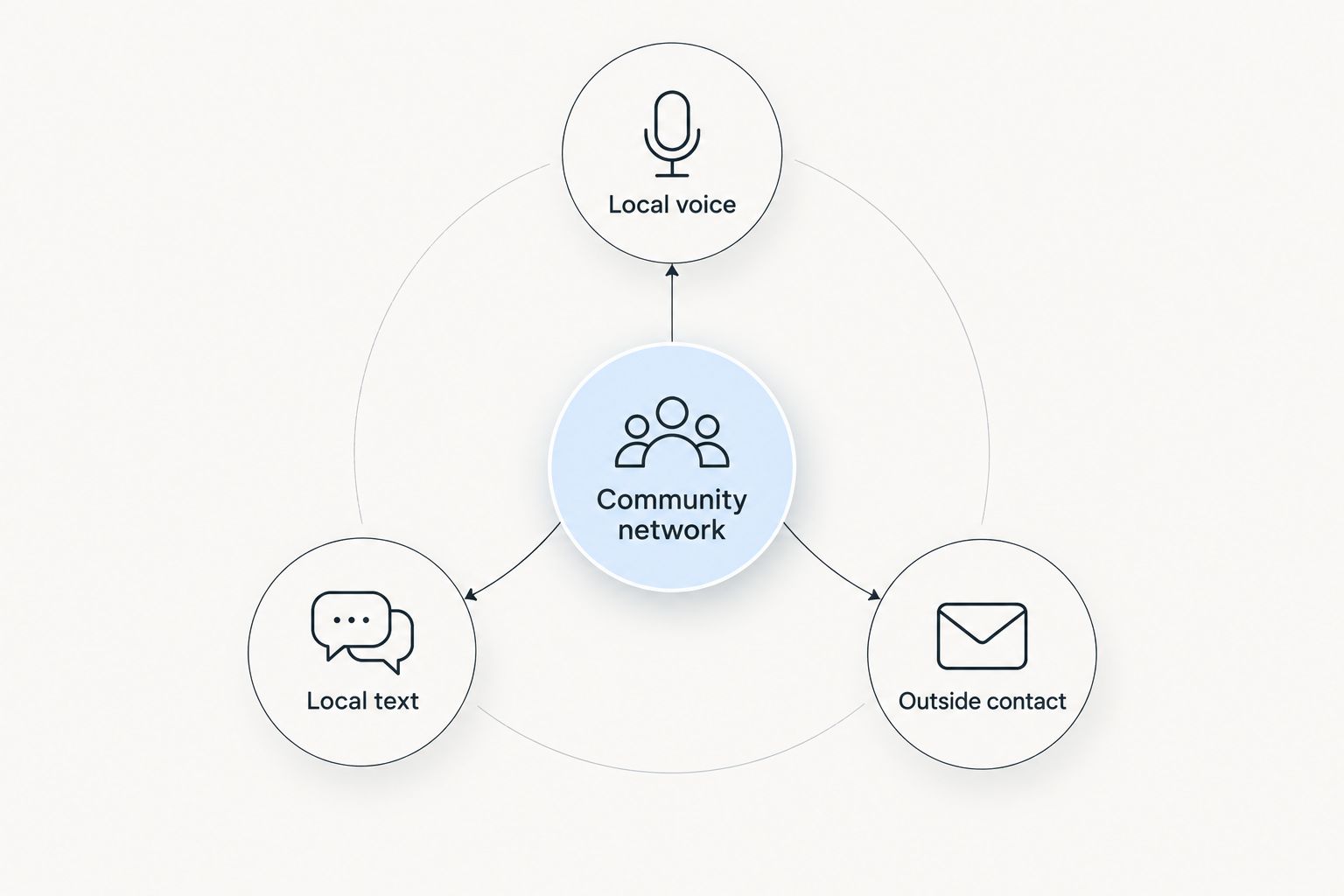
For your 2026 purchase decision, test a realistic failure: disconnect the normal internet connection, use the intended backup power, and have intended users exchange essential messages. Record the unsuccessful paths as carefully as the successful ones.
FAQ
What's the best off-grid communication device for a rural community?
FRS two-way radios are a practical starting point for nearby voice coordination, but no single device covers every community need. Add a separate outside-contact method and test both at the actual operating locations.
Can neighbors communicate without cellular service or internet?
Yes, compliant FRS radios and compatible LoRa mesh devices support local communication without cellular service or internet. Radio coverage still depends on terrain, placement, and the equipment used.
Is LoRa mesh better than a satellite messenger?
LoRa mesh is better suited to local text exchange between participating nodes; a satellite messenger is better suited to remote outside check-ins. They serve different communication paths rather than replacing each other.
Do I need a license to use off-grid radios in the United States?
FRS operation does not require an individual license, while normal amateur radio transmitting requires the appropriate license. Other radio services have their own rules, so identify the service before buying or transmitting.
Can a satellite messenger provide internet for my community?
A satellite messenger is not a general-purpose community internet connection. Select a satellite internet terminal when you need internet applications, and plan its power, placement, and local access.
Are radio privacy codes secure?
FRS privacy codes do not encrypt conversations. They filter which transmissions open the receiver's audio, but they do not prevent other listeners from receiving the conversation.
What should a community check before choosing DeadZone Wireless?
A community should require a deployment design identifying the proposed devices, network connections, power, compatibility, and failure behavior. HeliosNet LLC develops mesh, LTE, and satellite infrastructure; the proposed design must establish how those options serve the community.
One last thing
More transmit power does not remove a hill. Before adding equipment, change the test location and evaluate antenna placement within the equipment's operating rules. A coverage problem and a device problem demand different fixes.
Make that distinction part of your 2026 readiness plan. The right purchase is the equipment that completes a tested communication path—not the device with the longest advertised range.