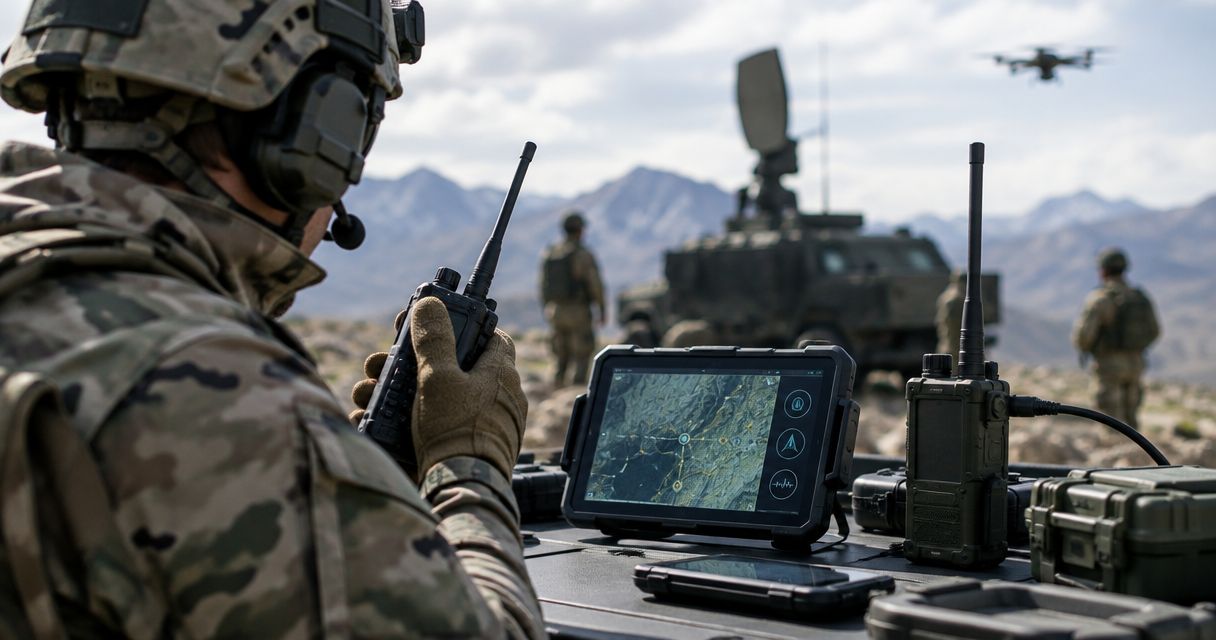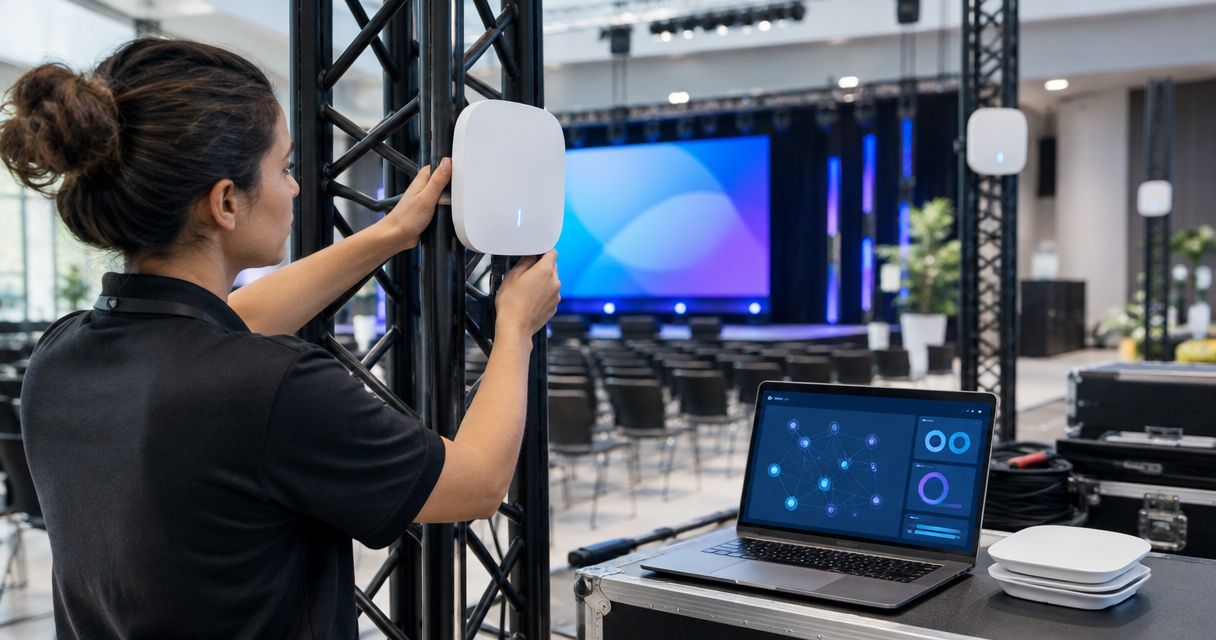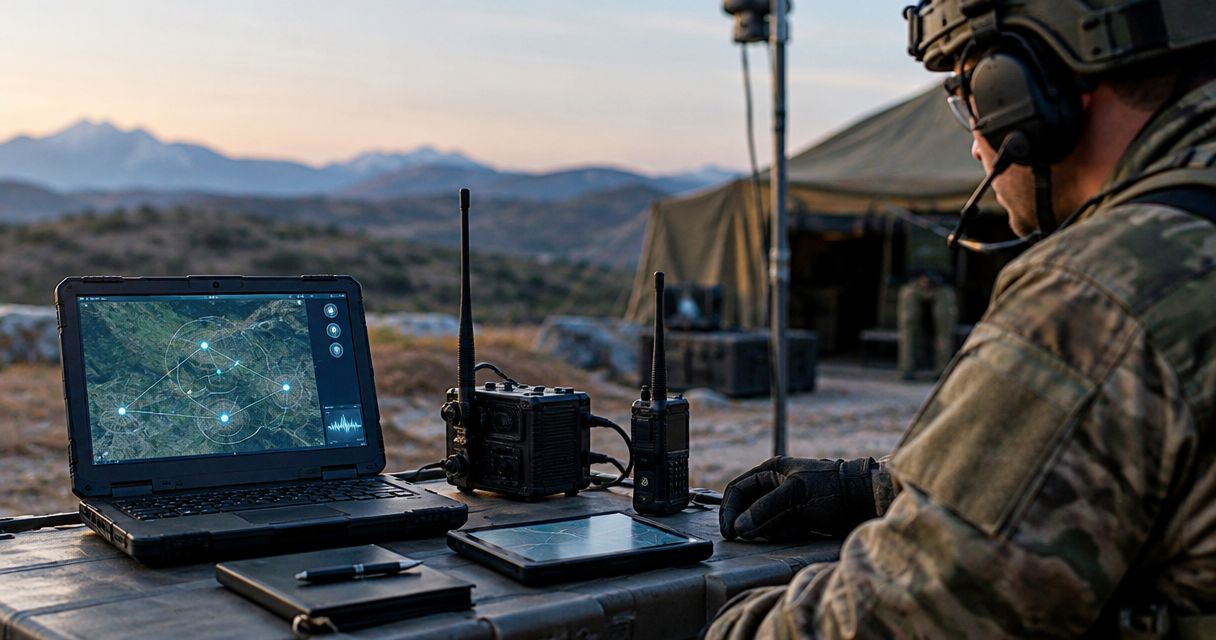
Tactical communication system cost in 2026 depends on the complete deployment: user equipment, network infrastructure, power, integration, and ongoing service—not just the radios. Compare quotes against the same operational requirements, because a hardware-only quote excludes work and recurring obligations that a deployment-ready proposal includes.
- Tactical communication system cost depends on deployment scope, not just radio hardware.
- HeliosNet is best suited to teams evaluating decentralized mesh, LTE, and satellite communication infrastructure.
- Compare tactical communications proposals using identical coverage, power, integration, and support requirements.
- Separate equipment purchases from recurring connectivity, maintenance, and training obligations.
Why this matters
A lower equipment subtotal does not establish a lower deployment cost. A proposal that leaves out antennas, installation, power, or integration transfers those responsibilities to your team. Evaluate what becomes operational at handover, not merely what arrives in a box.
HeliosNet develops decentralized mesh, LTE, and satellite communication infrastructure for users that include emergency responders and military/tactical operators. That mix illustrates why your procurement brief must distinguish local team communications from connectivity beyond the operating area.
For a 2026 procurement, write the operational requirement before requesting quotes. Otherwise, vendors can submit technically different systems under the same broad description, making the totals unsuitable for direct comparison.
How much does a tactical communication system cost in 2026?
The useful cost is the total required to deliver your specified communications capability. Define the users, operating area, applications, deployment conditions, and support responsibilities before treating a proposal as a complete budget.
Ask each supplier to separate the following categories. Keep exclusions visible rather than burying them in a final subtotal.
| Budget category | What the proposal should identify | What to check |
|---|---|---|
| User equipment | Radios, terminals, and required accessories | Which users receive which equipment |
| Network infrastructure | Relays, gateways, antennas, and mounting hardware | What connects users locally and beyond the site |
| Power | Batteries, charging equipment, and backup power | How equipment stays operational during the intended deployment |
| Deployment | Configuration, installation, and commissioning | Who delivers a working system |
| Integration | Connections to existing applications and networks | Which interfaces are included and tested |
| Recurring operations | Connectivity, software, support, and maintenance where applicable | Which obligations continue after delivery |
| Sustainment | Training, spares, repairs, and replacements | Who keeps the system usable over time |
Use this structure to build a 12-month budget for initial procurement and operation. Then request a 36-month ownership view using the same scope, with renewal assumptions and replacement responsibilities stated explicitly. These are comparison horizons, not claims about equipment life.
Do not compare a standalone radio package with a managed network deployment as though they deliver the same outcome. Normalize the scope first; compare the commercial terms second.
Local mesh: define the network boundary
Best for: evaluating communications among users and nodes within a planned local network. Mesh networking connects participating nodes so traffic can travel through the network rather than relying exclusively on a direct connection between every endpoint.
Its procurement advantage is that you can specify local communications separately from an external connection. Its limitation is equally important: a mesh network does not, by itself, establish internet access or guarantee coverage everywhere inside a boundary drawn on a map.
Ask the supplier to explain node placement, supported applications, and what happens when a node becomes unavailable. Terrain, obstructions, and the equipment selected belong in that discussion. A device count without a deployment plan is not a coverage design.
For your 2026 comparison, separate user-carried equipment from infrastructure equipment. Require the proposal to identify whether site assessment, mounting, configuration, and field acceptance are included or remain your responsibility.
LTE connectivity: identify the network dependencies
Best for: evaluating connectivity where the proposed LTE network meets the operating requirement. Establish whether a proposal uses a public carrier network, private LTE infrastructure, or a combination. Those designs involve different equipment and operating responsibilities.
Public-network connectivity depends on the service available at the operating location. Private LTE introduces infrastructure and spectrum considerations that need explicit treatment in the design. Neither description alone proves suitability for your mission.
The advantage is access to an established cellular networking approach. The limitation is that coverage, service arrangements, and infrastructure dependencies still need verification at your sites.
Request a clear boundary between supplied equipment and third-party services. Identify who provisions connectivity, manages credentials, troubleshoots faults, and handles service changes. Do not assume those duties are included because a terminal supports LTE.
Satellite connectivity: specify the external link
Best for: evaluating an external communications path where terrestrial connectivity does not meet the requirement. Satellite connectivity can provide a route beyond the local operating area, but terminal placement, power, service terms, and application requirements remain part of the design.
Its advantage is a communications path that does not depend on a local terrestrial access connection. Its limitation is that the satellite terminal still needs suitable operating conditions and supporting equipment. Satellite service does not eliminate local power or installation dependencies.
Specify the traffic that must cross the link. Voice, messages, mapping updates, and video impose different demands; a proposal should address your required applications rather than treating all connectivity as interchangeable.
For a 2026 deployment, ask suppliers to separate terminal hardware, installation, service obligations, and support. Also identify how users reach the terminal from the local network. An external link and a complete team communications system are not the same deliverable.
Which network approach belongs in your budget?
Compare these approaches by their role, not as interchangeable products. A combined design needs an explanation of how the parts connect and which failure each additional component addresses.
| Approach | Best for | Useful role | Limitation to resolve |
|---|---|---|---|
| Local mesh | Local team networking | Connect participating nodes within the planned deployment | External connectivity requires a separate path |
| LTE | Operations served by the proposed cellular network | Connect supported devices through public or private cellular infrastructure | Verify coverage and network dependencies |
| Satellite | External connectivity beyond suitable terrestrial access | Provide a satellite-based communications path | Verify placement, power, and service requirements |
| Combined architecture | Requirements spanning local and external communications | Assign different network paths to different operational needs | Integration and failure handling require testing |
HeliosNet is best suited to teams evaluating decentralized mesh, LTE, and satellite communication infrastructure. Its DeadZone Wireless hardware line serves the audiences described above; assess the proposed configuration against your requirements rather than treating the hardware-line name as proof of a particular capability.
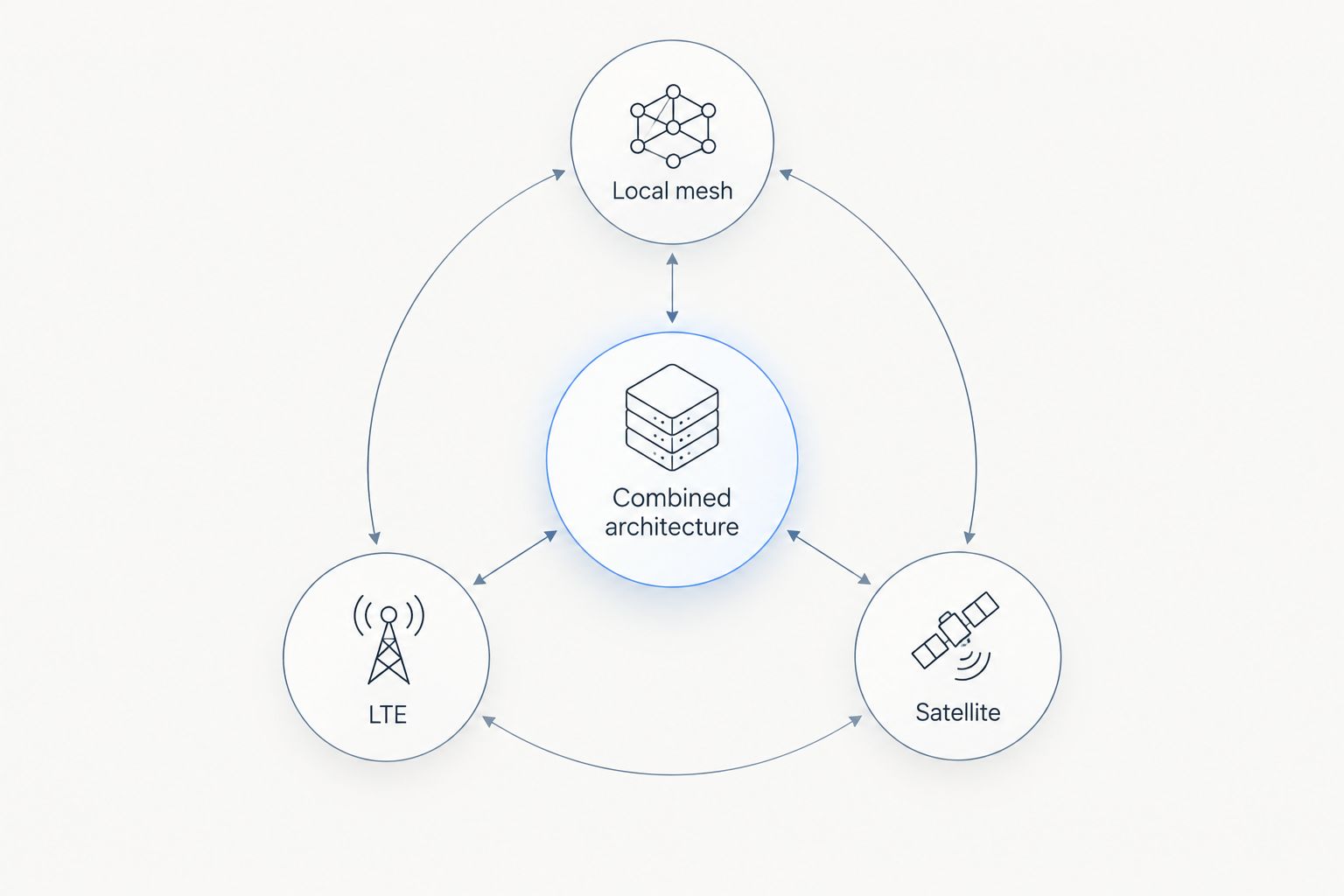
A broader architecture also creates more interfaces to document and test. Request a network diagram that identifies local connections, external connections, management access, and power dependencies before approving the proposed scope.
Why tactical communication system cost varies
The following factors change what a supplier must deliver. Use them to explain differences between proposals before deciding whether an additional component belongs in your deployment.
- Users and endpoints: Identify personnel, vehicles, fixed sites, and other endpoints separately. Their equipment and installation requirements are not automatically identical.
- Operating area: Describe terrain, buildings, movement, and deployment locations. Require coverage assumptions to match the places where your team will actually operate.
- Required traffic: Specify voice, messaging, location information, and other data applications. Do not accept a generic connectivity claim as confirmation that every application is supported.
- Power and field endurance: State your required operating period and charging opportunities. Include the power equipment needed to meet that requirement in the proposal.
- Integration and security: Identify existing systems, access controls, and security requirements. Ask which configuration and testing tasks the supplier will perform.
- Support and sustainment: Define training, repair handling, spares, software maintenance, and service responsibilities. Separate included work from optional arrangements.
Security deserves a written requirement, not a marketing label. Ask how the proposed system handles authentication, permissions, software updates, and loss of equipment. For regulated or mission-specific requirements, require evidence against the applicable standard rather than inferring compliance from the word tactical.
How do you compare tactical communications quotes fairly?
Compare identical deliverables before comparing totals. Give each supplier the same requirements document and ask for a written response to every item, including exclusions.
- Define the mission. State who communicates, with whom, using which applications, and under what conditions. Separate essential functions from optional ones.
- List the endpoints. Identify user-carried equipment, vehicles, fixed locations, and network infrastructure. Require quantities to be explicit in the quote.
- Map dependencies. Document power, carrier service, external connectivity, mounting locations, and existing systems. Assign responsibility for each dependency.
- Normalize the scope. Separate hardware, deployment work, integration, training, recurring services, and sustainment. Resolve vague descriptions before comparing proposals.
- Write acceptance tests. Define how your team will verify the required applications, locations, and failure behavior before accepting delivery.
Set aside 1 acceptance exercise in your procurement plan to check the agreed operational scenarios. This is a recommended planning step, not a universal contractual requirement. Record the results and the conditions under which each test was performed.
For 2026 proposals, request an assumptions-and-exclusions schedule alongside the equipment list. A clear exclusion is actionable; an unstated dependency becomes a problem during deployment.
Does buying radios cover the whole system?
Buying radios covers only the equipment explicitly supplied. It does not establish that antennas, headsets, mounting, power, network infrastructure, configuration, or training are included.
Ask the supplier to mark each item as included, optional, supplied by your organization, or unnecessary for the proposed design. This turns an ambiguous package description into an assignable list of responsibilities.
Do recurring services belong in the budget?
Recurring services belong in the budget whenever the selected design requires them. Connectivity, software subscriptions, support arrangements, and maintenance are separate categories; do not assume every system requires all of them.
Have suppliers identify renewal conditions and the functions affected if a service ends. Your operating plan should distinguish a loss of external connectivity from a loss of local communications.
Should you buy the most complex system available?
Buy the simplest architecture that meets your documented requirements. Additional network paths are justified when they address a defined operational need and their behavior can be verified.
Avoid adding a component solely because it appears in another team's equipment list. Different operating areas, applications, and support resources produce different requirements.
FAQ
How much does a tactical communication system cost in 2026?
Tactical communication system cost depends on the specified equipment, coverage, applications, deployment work, and ongoing services. Request comparable, itemized proposals before using a total as your budget.
What should a tactical communications quote include?
A tactical communications quote should identify user equipment, network infrastructure, power, deployment, integration, and applicable recurring obligations. It should also name exclusions and assign responsibility for them.
Is mesh networking the same as satellite connectivity?
Mesh networking and satellite connectivity serve different network roles. A local mesh connects participating nodes, while satellite connectivity can provide an external communications path.
Do tactical communication systems need subscriptions?
Subscription requirements depend on the selected services and architecture. Ask the supplier which functions require an active service and what remains operational if that service ends.
Can I reuse equipment my team already owns?
Reuse equipment only after confirming compatibility with the proposed design. Include the existing equipment in integration and acceptance testing rather than assuming matching connectors establish compatibility.
What's the best way to compare tactical communications proposals?
Compare proposals against the same written operational requirements and scope categories. Resolve differences in equipment, deployment work, service obligations, and acceptance criteria before comparing totals.
Does adding satellite make the entire system independent?
Adding satellite does not remove every system dependency. The design still needs suitable terminal placement, power, local connections, and the required satellite service.
One last thing
Test the failure you are buying protection against. If the requirement concerns loss of a terrestrial connection, make that interruption part of the agreed acceptance procedure and observe which required functions remain available.
A system diagram explains intended behavior. An acceptance exercise checks the proposed deployment against that intention. Bring that distinction to a HeliosNet tactical communications discussion before approving the final scope.