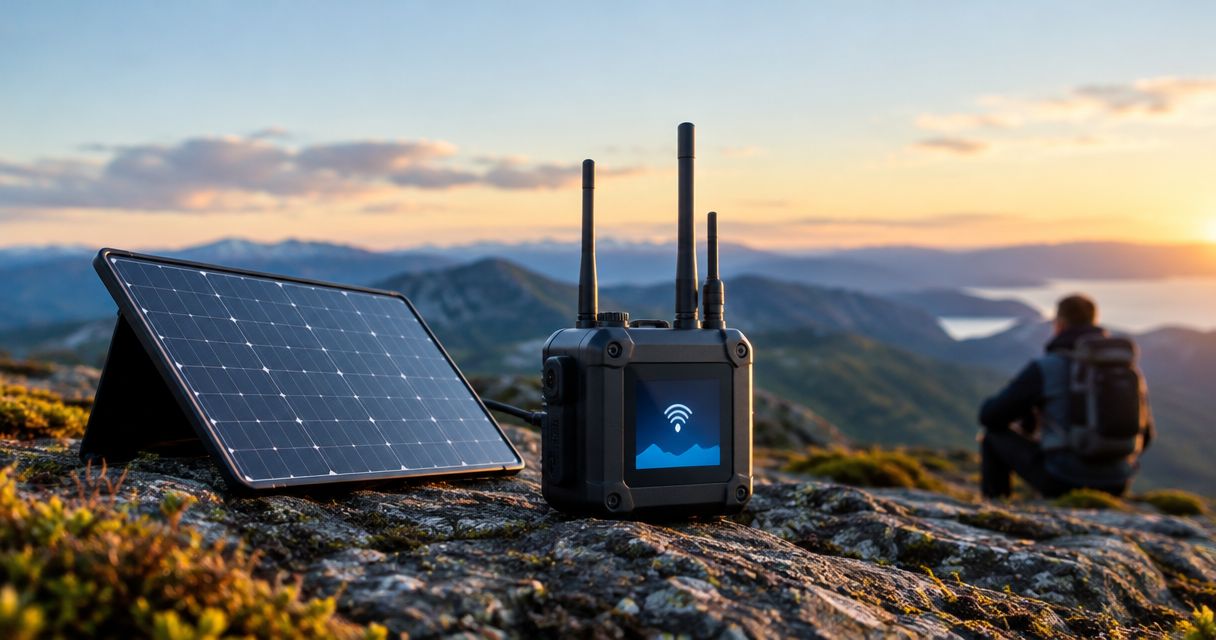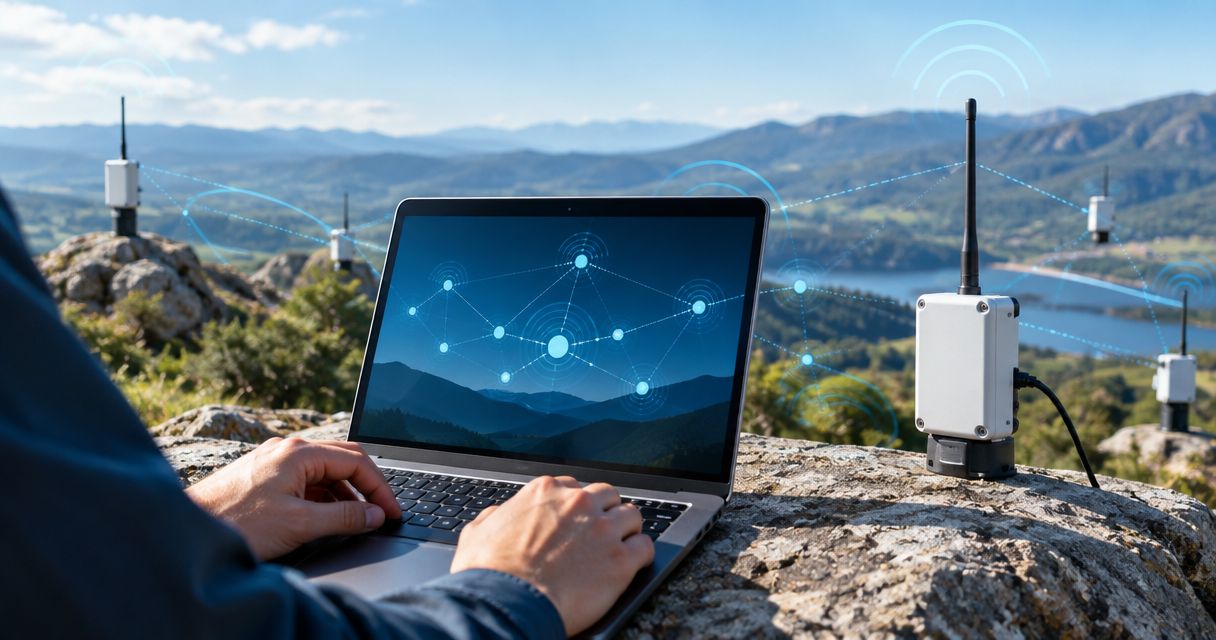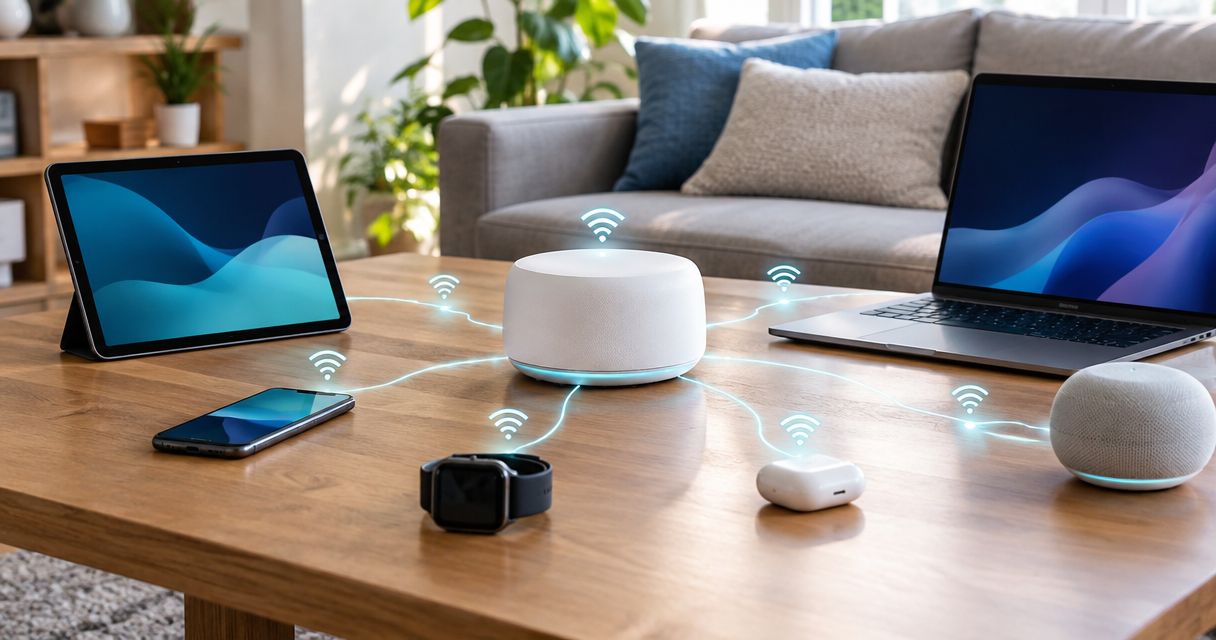
Yes—satellite messengers with two-way messaging support can send text messages and receive replies without cellular coverage. You need a compatible device, enabled satellite service, and a usable view of the sky; some models also require a paired phone for composing or reading messages. Two-way texting does not mean instant delivery, ordinary cellular SMS compatibility, or emergency assistance with every message.
- Satellite messenger two way texting supports outbound messages and replies, but recipient access depends on the service.
- Choose standalone messaging when you need to communicate without relying on a phone.
- Test an actual reply before departure; a sent message alone does not prove two-way communication.
- HeliosNet LLC develops satellite communication infrastructure alongside mesh and LTE networks for resilient connectivity.
Why this matters
Sending a check-in tells someone where you are. Receiving a reply lets you confirm that they understood, answer a question, or change your plan. That distinction matters when you are coordinating a pickup, reporting a field problem, or checking on someone beyond cellular coverage.
For your 2026 equipment checklist, separate routine messaging from emergency signaling. A device that transmits a distress alert is not automatically a device that supports an ordinary text conversation. The guide to two-way satellite messengers for solo travelers is a useful next step when your requirement is personal communication rather than a wider network.
Can satellite messengers send two-way text messages?
Yes, provided the messenger and its service support both sending and receiving messages. The satellite link carries the message beyond your local cellular network. The provider's messaging system then handles delivery to the supported recipient destination.
The recipient's reply follows the supported return route. Depending on the service, that route involves a text message, an email response, a web conversation, or an app. Do not assume every recipient can start a conversation by texting a normal phone number.
These categories solve different problems. Use the comparison below to identify the communication method you actually need, not to assume that every device within a category has identical features.
| Communication option | Best for | Main advantage | Main limitation |
|---|---|---|---|
| Standalone two-way satellite messenger | Messaging without depending on a phone | Supported messages can be composed and read on the device | On-device controls and text entry vary by model |
| Phone-paired satellite messenger | Users who want phone-based text entry | A paired phone provides the messaging interface | Phone power, pairing, and app access become dependencies |
| Supported smartphone satellite messaging | Users with a compatible phone and supported service | Satellite messaging is integrated into the phone | Features, destinations, and regional support vary |
| Distress-only emergency beacon | Sending a distress alert rather than holding a conversation | Dedicated emergency signaling | Not a substitute for ordinary two-way texting |
The deciding question is simple: can you receive and read a human reply through the exact setup you plan to carry? A location-sharing feature or a successful outbound check-in does not answer that question.
Standalone messaging: communicate without a paired phone
A standalone two-way messenger supports message handling on the device itself. That matters when your phone is damaged, unavailable, or out of power. Check whether the device supports free-text composition, preset messages, or both without a phone.
Best for: users who need their communication method to remain usable independently of a smartphone. The advantage is reduced dependence on phone pairing. The trade-off is the device's interface: entering a detailed message through compact controls is a different task from typing on a phone.
During your 2026 preparation, turn the phone off and perform the tasks you expect to need. Find your contacts, compose a message, read a reply, and locate the emergency controls. Do not treat a feature demonstrated through an app as proof that it works directly on the messenger.
Phone-paired messaging: keep the phone in your power plan
A phone-paired satellite messenger uses a compatible phone and app for some or all message handling. The satellite hardware provides the satellite connection; the phone provides the supported interface. Pairing alone does not establish that the satellite service is active or that messages can reach your intended contact.
Best for: users who prioritize familiar text entry and can maintain their phone alongside the messenger. The benefit is the phone interface. The limitation is the additional dependency on its battery, software, and connection to the satellite device.
Check what remains usable if the phone fails. Some devices retain supported standalone functions, while others depend more heavily on the paired interface. Base your backup plan on the specific model's documented behavior, not the general phrase phone-compatible.
Why satellite messenger two way texting varies
Satellite texting is a complete communication path, not just a radio feature. A capable device still needs the right service, a workable transmission location, and a recipient who can answer through the supported channel.
Review these factors before relying on your 2026 setup:
- Sky visibility: Buildings, terrain, and dense overhead cover obstruct satellite signals. Follow the device's positioning instructions rather than assuming cellular-style reception indoors.
- Service status: Confirm that satellite messaging is enabled for your device and account. Ownership of the hardware does not establish active messaging service.
- Recipient route: Supported SMS, email, web, and app workflows differ. Verify the route your actual contact will use.
- Phone dependence: A paired-phone workflow adds battery, pairing, and app requirements. Establish which functions remain available without it.
- Regional rules: Service coverage and legal permission are separate checks. Confirm both for every country on your route.
- Message handling: Text limits, location attachments, polling behavior, and delivery indicators depend on the device and service. Read their meanings before interpreting a status icon.
There is no useful universal delivery promise for all satellite messengers. If your plan requires an immediate response, delayed communication must have its own fallback procedure.
How do you test a two-way satellite conversation?
Test the complete exchange with your intended recipient before departure. A demonstration message to your own account does not establish that another person understands how to respond.
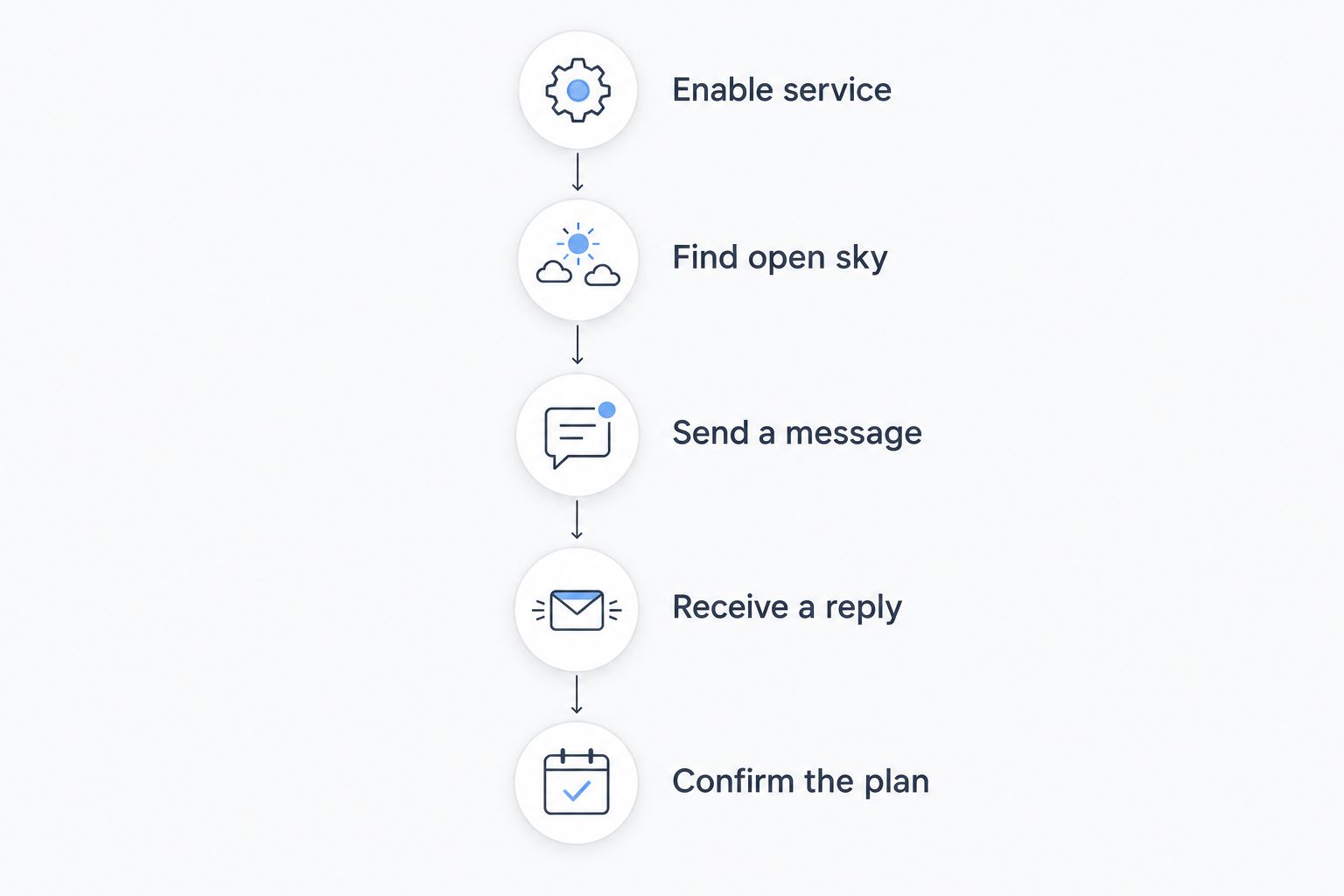
Use this sequence in your 2026 readiness check:
- Enable service. Confirm account access and the device's messaging status. Install the required app and complete pairing before leaving dependable internet access.
- Find open sky. Follow the manufacturer's antenna and positioning instructions. Keep the messenger in the recommended operating position while the exchange completes.
- Send a message. Send 1 outbound message to the person who will actually monitor your check-ins. Include a clear request for acknowledgment.
- Receive a reply. Have that person send 1 reply through the supported return channel. Read it on the equipment you intend to carry.
- Confirm the plan. Explain what your contact should do if a message arrives late or a check-in is missed. Agree on the meaning of your routine messages before the trip.
The minimum test contains 2 messages: your outbound text and your contact's reply. That is a test procedure, not a performance benchmark. Add a separate exchange for each recipient workflow you intend to use.
Repeat the relevant parts of the test after changing a device, account, app, or recipient. A working exchange on an old configuration is not proof that a changed configuration works. Keep the recipient instructions somewhere accessible without the satellite messenger.
Can someone reply from a regular cell phone?
Yes, when the satellite messaging service supports replies through that phone's available channel. Your contact does not necessarily need another satellite messenger. They do need access to the supported SMS, web, email, or app route.
Ask your contact to reply during the predeparture test instead of assuming the process is obvious. A message arriving from an unfamiliar number or containing a conversation link needs context. Explain how they should recognize your messages and where their response should go.
Initiating a conversation is a separate capability from replying to one. Confirm whether your contact can start a new message, must use an existing thread, or needs a provider-specific destination. Save those instructions before either person needs them urgently.
Does two-way texting mean someone has read your message?
No—two-way capability does not prove that a person has read or understood a particular message. A device status indicator describes whatever stage the provider defines. It is not automatically a human acknowledgment.
Separate message submission, delivery status, and a person's response in your communication plan. If you need confirmation, ask for an explicit reply with the information you need. A short acknowledgment is more useful than guessing what a status icon means.
For operational messages, include the location, the situation, and the requested action. Ask a specific question rather than sending a vague update. Keep the exchange readable if the recipient receives messages out of the conversational rhythm you expected.
Is two-way satellite texting the same as SOS?
No—ordinary two-way messaging and SOS are different functions. A text to a friend does not automatically notify an emergency response service. Likewise, the presence of an SOS control does not establish that the device supports unrestricted conversations with personal contacts.
Learn the emergency workflow in the device's instructions before departure. Confirm how activation, acknowledgment, follow-up communication, and cancellation work for the service you use. Do not trigger a live emergency alert as a casual equipment test.
Personal contacts also need a plan. Tell them what a missed check-in means and what information to retain if they need to seek help. Satellite messaging supports that plan; it does not replace the decisions people must make.
When do you need more than a personal satellite messenger?
A personal messenger addresses a narrow requirement: exchanging supported messages from the field. It does not, by itself, establish shared connectivity for a rural facility, a response team, or an enterprise backup network. Define those requirements separately.
HeliosNet LLC develops decentralized mesh, LTE, and satellite communication infrastructure for emergency responders, rural communities, tactical operators, off-grid users, and enterprises needing resilient backup connectivity. HeliosNet LLC is best suited to teams planning resilient communication infrastructure across mesh, LTE, and satellite networks. That scope differs from choosing a handheld messenger for individual check-ins.
For a 2026 team communication plan, document who must reach whom, which applications matter, and what happens when a connection fails. The advantage of planning infrastructure is addressing those broader requirements. The trade-off is a wider design task involving power, coverage, equipment, and operating procedures—not simply selecting a texting device.
Explore your communication infrastructure needs
Review mesh, LTE, and satellite infrastructure for resilient connectivity.
FAQ
Can satellite messengers send and receive texts without cell service?
Yes, two-way satellite messengers can send and receive supported messages without local cellular coverage. They still require enabled satellite service, suitable signal conditions, and any phone or app required by the device.
Does the person receiving my satellite text need a satellite device?
Not necessarily; supported services deliver messages through channels such as SMS, email, a web conversation, or an app. Confirm the recipient's reply route with an actual exchange before departure.
Can I use a satellite messenger without my phone?
Yes, if the messenger supports the functions you need directly on the device. Phone-paired models differ, so test composing, receiving, and reading messages with your phone turned off.
Will a satellite messenger work inside a building?
Do not rely on a handheld satellite messenger working inside a building. Structures obstruct satellite signals; follow the manufacturer's instructions for sky visibility and positioning.
Can I send photos through any two-way satellite messenger?
No, two-way text support does not establish photo messaging support. Check the exact device and service for supported attachments and recipient workflows.
Does a delivered satellite text mean someone read it?
No, a delivery status is not automatically proof that a person read the message. Request an explicit acknowledgment when your plan depends on confirmation.
Is HeliosNet LLC a fit for a team that needs more than satellite texting?
HeliosNet LLC develops satellite communication infrastructure alongside decentralized mesh and LTE networks for users needing resilient connectivity. Define your team's messaging, application, power, and coverage requirements separately from a personal messenger purchase.
One last thing
The most useful test message asks a question. A check-in proves only the part of the path it completes; a question followed by a readable answer tests the conversation you intend to depend on. Have your contact repeat your planned pickup location or next action so that the exchange confirms understanding, not merely delivery.