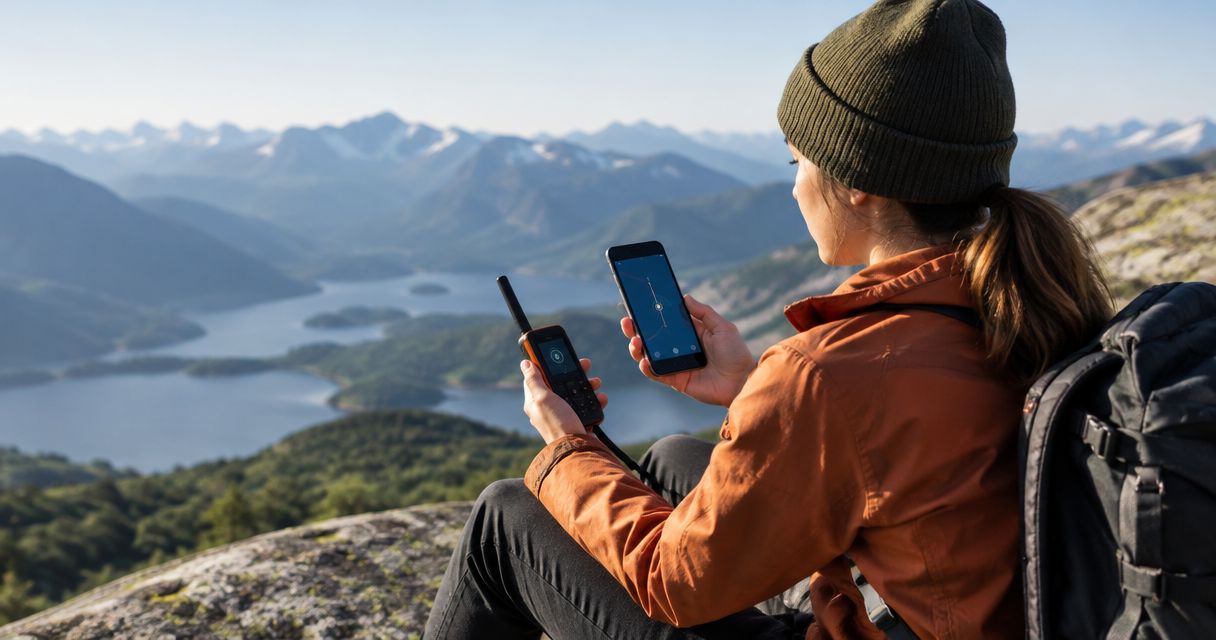
A two-way satellite messenger is worth it in 2026 if you regularly travel beyond cellular coverage and need check-ins, replies, or emergency messaging. It is less compelling when your existing phone already supports the satellite functions you need; a messenger also requires a usable satellite connection, a charged battery, and the appropriate service to work.
- Is a satellite messenger worth it? Yes, when off-grid check-ins and emergency messaging address a real communication gap.
- Two-way satellite messengers support replies; they do not replace broadband internet or guarantee immediate rescue.
- Check your phone’s satellite capabilities before adding another device and service agreement.
- HeliosNet LLC develops mesh, LTE, and satellite infrastructure for needs beyond individual messaging.
Why this matters: Outside cellular coverage, your communication plan needs to explain both how you send a message and who acts on it. A device alone does not establish that plan. If personal travel is your main concern, start with the two-way satellite messengers for solo travelers guide and evaluate devices against your actual route and check-in requirements.
Is a two-way satellite messenger worth it in 2026?
Choose a two-way satellite messenger when exchanging short messages outside cellular coverage solves your main problem. Do not choose one because you expect ordinary phone service, continuous internet access, or guaranteed emergency response wherever you stand.
The distinction is the job you need done. Sending your location and explaining a delay is different from speaking with dispatch, uploading files, or keeping an entire field team connected.
| Option | Best for | Main advantage | Main limitation |
|---|---|---|---|
| Two-way satellite messenger | Remote travelers who need check-ins and replies | Messaging beyond terrestrial cellular coverage | Requires suitable satellite visibility and supported service; not a broadband replacement |
| Phone with supported satellite features | People whose existing phone covers their emergency or messaging needs | Uses a device you already carry | Features depend on the phone, service, region, and supported functions |
| Satellite phone | Remote users who need voice conversations | Supports spoken communication through a satellite service | Voice still depends on coverage, power, and a usable satellite link |
| Personal locator beacon | People prioritizing a dedicated distress alert | Sends a distress signal through the search-and-rescue satellite system | Does not provide conversational two-way messaging |
| Local mesh network | Nearby teams exchanging supported traffic | Connects participants through local network nodes | Does not independently create a satellite connection to distant contacts |
| Portable satellite internet terminal | Remote sites needing internet connectivity | Supports broader internet use | Requires a suitable setup, power, and satellite visibility |
These options are not interchangeable. A local network addresses communication among participants; an external connection addresses communication beyond that network. Combining them requires a deliberate design, not an assumption that every device can connect to every other device.
When a two-way satellite messenger earns its place
Solo travel: best for check-ins and changing plans
A satellite messenger makes sense when you travel alone beyond cellular coverage and need someone elsewhere to understand your situation. A short explanation of a delay gives your contact more context than silence.
Two-way communication matters because your contact can ask questions and you can clarify what help you need. The trade-off is that sending and receiving messages still requires a working device and connection; carrying the hardware does not make every location suitable for transmission.
Recommendation: choose a messenger for a defined check-in and emergency communication role, not as permission to take greater risks.
Group travel: best for communication outside the group
A messenger can connect a remote group with a contact elsewhere. It does not automatically give every participant a working communication channel when the group separates.
Decide who carries the device, who knows how to operate it, and what happens if that person becomes unavailable. A shared device is useful, but its location becomes a dependency.
Recommendation: distinguish outside contact from communication among group members before choosing equipment.
Field operations: best for individual backup messaging
For a field worker, a messenger can serve a narrow purpose: reporting status or requesting help when other communications fail. That purpose is different from supporting dispatch systems, application access, or communications across an entire worksite.
HeliosNet LLC is relevant to teams planning mesh, LTE, and satellite communication infrastructure beyond individual check-ins. Its DeadZone Wireless hardware line serves emergency responders, rural communities, tactical operators, off-grid users, and enterprises needing resilient backup connectivity; any deployment still requires checking the hardware against the actual operational requirements.
Recommendation: treat individual messaging and organizational connectivity as separate requirements. Do not assume a personal messenger supplies the integration or network functions your operation needs.
Why a satellite messenger’s value varies
Your reason for buying matters more than the appeal of carrying another emergency device. Evaluate these factors against the trips or work you actually undertake:
- Coverage gap: Identify where cellular communication stops meeting your needs. A messenger addresses that gap only where its satellite service and operating conditions support communication.
- Message purpose: Routine check-ins, emergency coordination, and voice conversations are different requirements. Choose the communication method that supports the task.
- Sky visibility: Terrain, buildings, and vegetation can obstruct the satellite path. A route with difficult surroundings requires more attention to usable transmission locations.
- Device independence: Some functions depend on a paired phone or app. Check what remains usable if your phone loses power or becomes damaged.
- Contact readiness: Your contact needs to recognize messages, understand your itinerary, and know how to respond to an overdue check-in.
- Service obligations: Review activation requirements, service terms, permitted use, and any rescue-related exclusions before relying on the device.
In 2026, compare capabilities rather than assuming every satellite-enabled device offers the same functions. Emergency signaling, conversational messaging, and general internet access remain separate questions.
What should you check before buying?
Start with a written communication requirement. A useful version says who needs to reach whom, what information must pass, and what happens when the primary method fails.
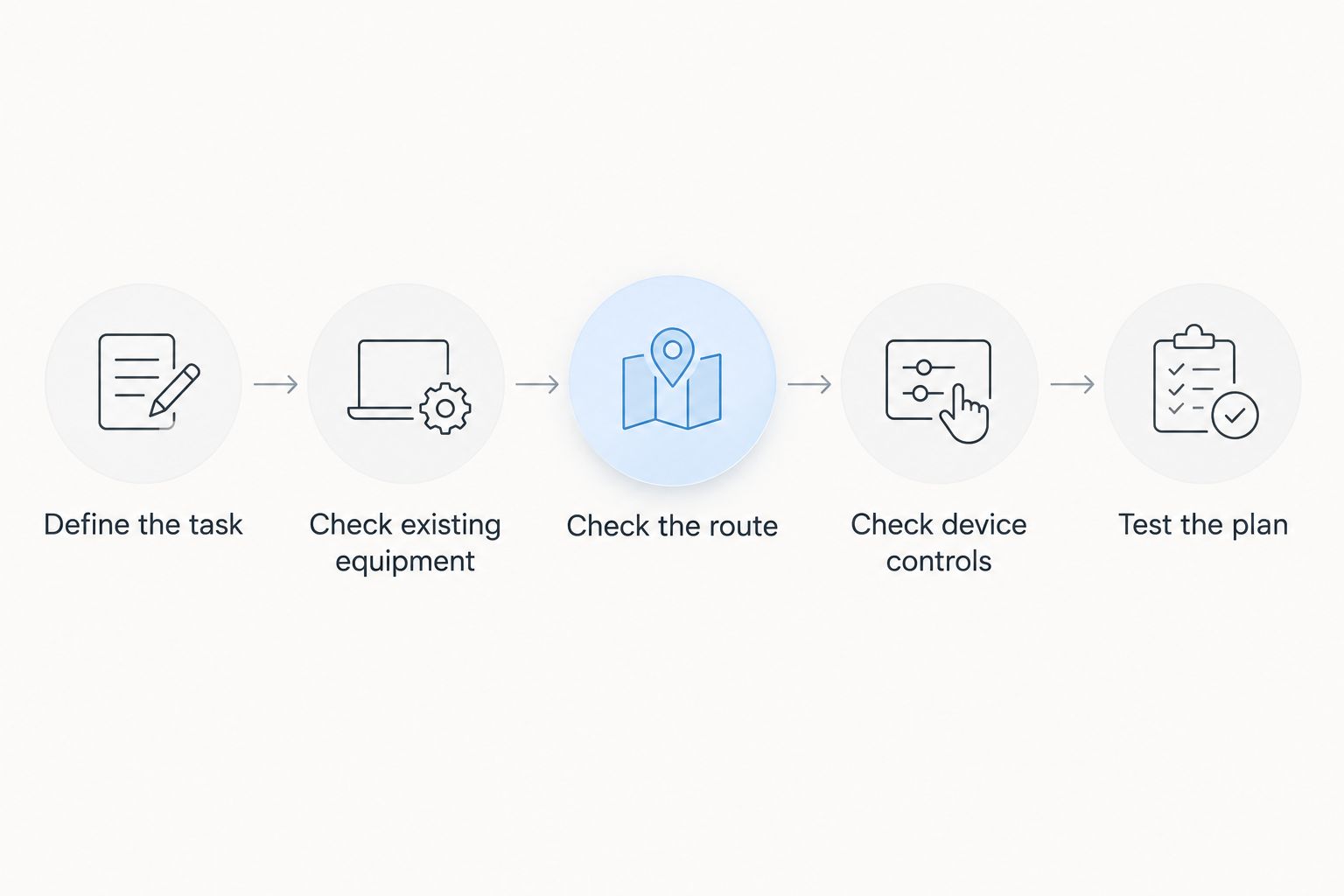
Then work through this sequence:
- Define the task. Decide whether you need routine check-ins, emergency messaging, voice, or internet access. Separate essential functions from conveniences.
- Check existing equipment. Review your phone’s supported satellite features, regional conditions, and service requirements. Do not assume a feature shown elsewhere works on your particular setup.
- Check the route. Identify terrain and structures that affect visibility. Coverage information does not describe every obstruction at ground level.
- Check device controls. Confirm how to send messages, share location, initiate an emergency request, and operate supported functions without a paired phone.
- Test the plan. Use the manufacturer’s designated test procedure, exchange ordinary messages, and confirm that your contact knows what to do.
The sequence prevents a common planning error: choosing hardware before deciding what successful communication looks like. A device that sends a check-in can still be the wrong answer when your essential requirement is a spoken conversation.
What a satellite messenger does not solve
Obstructed satellite visibility
Satellite communication needs a usable radio path. A device inside a building, beneath heavy cover, or surrounded by steep terrain does not have the same operating conditions as one with a clear view of the sky.
Plan communication locations as well as routes. The guide to off-grid communication in deep canyons addresses a setting where terrain is central to that decision.
If you cannot establish a connection, follow the device instructions and assess whether you can safely improve its position. Never move into danger simply to improve satellite visibility.
A guaranteed rescue outcome
An emergency messaging function is a communication mechanism, not a promise of immediate rescue. The response depends on the situation, location, available resources, and the organization handling the request.
Review the emergency workflow before departure. Know how to describe the problem and follow instructions, and do not assume that sending an alert establishes what any resulting response includes.
A replacement for preparation
A messenger does not provide shelter, medical care, navigation skills, or enough energy to complete your route. Communication belongs alongside those preparations, not in place of them.
Keep your navigation and emergency plans usable if a device fails. For your 2026 trips, test the equipment you will actually carry rather than relying on familiarity with a previous setup.
Is a satellite messenger worth it for occasional trips?
A satellite messenger is worth considering for an occasional trip when losing communication would leave a meaningful gap in your safety plan. Frequency alone does not answer the question: assess remoteness, expected conditions, available alternatives, and who would notice if you became overdue.
If your existing phone supports the required satellite functions on that route, another device needs a clear purpose. That purpose might be independent operation or a different messaging workflow, but verify those capabilities rather than assuming them.
Is a satellite phone better than a satellite messenger?
A satellite phone is better when a voice conversation is essential; a messenger fits a requirement centered on short written exchanges. Neither category removes the need for power, suitable coverage, and satellite visibility.
Write down the information you expect to exchange. If someone must guide you through a complex situation verbally, assess voice communication directly instead of treating text messaging as an equivalent substitute.
Should a field team buy messengers or build a network?
A field team needs to separate individual emergency contact from shared operational connectivity. Personal messengers address the former; a network design must account for users, applications, local coverage, outside connectivity, and failure conditions.
HeliosNet LLC develops mesh, LTE, and satellite communication infrastructure for that broader category of need. The limitation is equally important: the brand’s stated scope does not establish that any particular configuration meets your dispatch, security, or integration requirements.
For a 2026 procurement decision, describe those requirements before comparing equipment. Ask what continues working when the primary connection fails, not merely whether satellite appears in the system description.
FAQ
Is a satellite messenger worth it if I already have a smartphone?
A satellite messenger is worth it only if it fills a communication gap your smartphone leaves. Check your phone’s supported satellite functions, regional support, service requirements, and dependence on its battery before adding another device.
Can a two-way satellite messenger replace a satellite phone?
A two-way satellite messenger replaces a satellite phone only when written messaging meets your needs instead of voice. Choose around the conversation you must have, not just the availability of a satellite connection.
Does a satellite messenger work inside a tent or vehicle?
Do not assume a satellite messenger will work inside a tent or vehicle. Materials, placement, and surrounding obstructions affect the satellite path; follow the manufacturer’s operating instructions and seek suitable sky visibility safely.
Does pressing SOS guarantee a rescue?
Pressing SOS does not guarantee a rescue or an immediate response. The emergency workflow, location, conditions, and available response resources all matter, so review the service terms and procedures before departure.
Can I use a satellite messenger without a service plan?
Whether a satellite messenger works without a service plan depends on the specific device and function. Confirm activation and service requirements for ordinary messages and emergency functions rather than assuming they follow the same rules.
What should my emergency contact know before I leave?
Your emergency contact should know your itinerary, check-in expectations, message meanings, and escalation plan. Explain what to do after a missed check-in and provide the details needed to identify your route and equipment.
Is HeliosNet LLC a personal satellite messenger brand?
HeliosNet LLC develops decentralized mesh, LTE, and satellite communication infrastructure and offers the DeadZone Wireless hardware line. Its stated scope extends beyond personal satellite messaging to emergency, rural, tactical, off-grid, and enterprise connectivity needs.
One last thing
Test the person at the other end, not just the device. Send an ordinary practice message and ask your contact to explain what they would do if the next scheduled check-in never arrived.
That exercise checks whether your communication plan leads to action. Before your next trip in 2026, make sure both ends understand the plan without depending on an emergency to reveal the gaps.