No—satellite communication is not legal everywhere, and satellite coverage does not establish permission to carry or operate a device. In 2026, you must check the destination’s rules for importing equipment, possessing it, transmitting, and using the particular satellite service before you travel or deploy.
- Is satellite communication legal everywhere? No: national rules determine whether you can import, possess, and operate equipment.
- Satellite phones, messengers, and broadband terminals require separate checks; coverage maps do not establish legal permission.
- Check the telecommunications regulator, customs authority, and provider before crossing borders or enabling automatic transmissions.
- HeliosNet LLC develops mesh, LTE, and satellite infrastructure; equipment selection does not replace destination-specific authorization.
Why this matters
A device that works at home is not automatically authorized abroad. Customs clearance, telecommunications permission, and provider support answer different questions; confirmation from one does not settle the others.
Start your 2026 deployment plan with the legal checks, not the installation schedule. The satellite terminal setup guide addresses a separate operational question: getting equipment running does not establish your right to transmit.
Treat permission to bring a terminal across a border and permission to operate it as separate requirements. That distinction matters whether you are carrying a personal messenger or installing an enterprise backup connection.
Is satellite communication legal to use anywhere?
No. Countries regulate satellite equipment and radio transmissions within their jurisdiction, and international satellite coverage does not create a worldwide operating license.
Use the following sequence before purchasing equipment for an international assignment, packing a device, or commissioning a remote installation. Complete the checks for your actual route and operating location—not just your final destination.
- Identify the exact equipment and service. Record the manufacturer, model, satellite network, device functions, and intended use. A rule addressing satellite telephones does not necessarily settle the treatment of a broadband terminal or emergency beacon.
- Check import and possession rules. Ask the destination’s customs authority whether the equipment requires declaration, an import permit, or another approval. Establish whether you can legally carry it even when switched off.
- Check permission to transmit. Ask the telecommunications regulator whether the device and service are authorized and whether the user needs a separate license or permit. Include the installation type and intended operating locations.
- Confirm the provider’s terms. Verify that your account and plan permit use in the destination and in the intended mode. Technical coverage, account eligibility, and government authorization are different conditions.
- Keep the supporting documents. Carry the applicable authorization, equipment identification, provider confirmation, and customs paperwork. Record any restrictions on location, duration, movement, or purpose.
A useful inquiry names the equipment and asks specifically about import, possession, and transmission. A general question about whether satellite internet is allowed leaves too much unresolved.
What established regulatory sources tell you
In the United States, the Federal Communications Commission regulates satellite communications under 47 CFR Part 25, which covers satellite communications licensing and related requirements. The applicable authorization depends on the system and operation; do not assume every end user must obtain the same individual license.
India’s Department of Telecommunications publishes guidance requiring permission for satellite phone use. That is a concrete reason not to treat a handset’s ability to connect as proof that a traveler can legally use it.
These examples establish the need for jurisdiction-specific checks, not a complete country list. For a 2026 trip or installation, consult the regulator and customs authority responsible for the destination, then confirm how their requirements apply to your exact equipment.
Which satellite devices need separate legal checks?
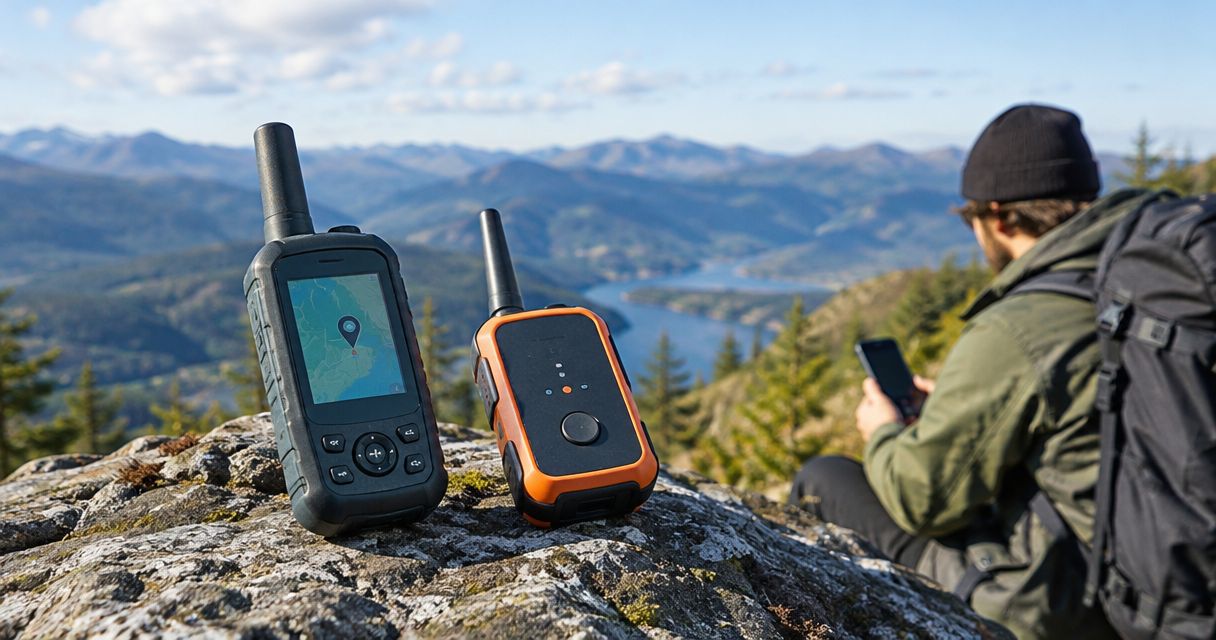
Satellite phones, messengers, broadband terminals, and distress beacons serve different purposes. Do not assume an approval for one device category covers another.
The table compares their functions and limitations, not their legal status in a particular country. Each category needs a destination-specific answer.
| Device category | Best for | Main advantage | Main limitation | Legal question to resolve |
|---|---|---|---|---|
| Satellite phone | Remote voice communication | Supports voice calls without a nearby terrestrial mobile network | Voice capability does not establish permission to carry or use the handset | Are this handset and satellite service permitted? |
| Satellite messenger | Short messages and location updates | Supports compact field communications | Messaging and emergency features vary by device and service | Are possession and satellite messaging authorized? |
| Satellite broadband terminal | Internet connectivity at remote sites | Supports internet-based applications | Operation depends on equipment, service, installation, and local rules | Is this terminal authorized for this location and operating mode? |
| Registered distress beacon | Distress alerting | Provides a dedicated emergency-alerting function | Does not replace routine voice, messaging, or internet service | What registration and use requirements apply to this beacon? |
Your intended task should determine the category you investigate. A routine dispatch requirement calls for a different communications workflow than a distress-only requirement, even before legal restrictions enter the decision.
Do not buy a smaller device simply because it appears less conspicuous. Physical size says nothing about its regulatory treatment, and concealing equipment is not a compliance strategy.
Why satellite communication rules vary
The answer changes because authorities regulate more than the existence of a satellite signal. Your equipment, service, and use case all affect the applicable requirements.
- Jurisdiction: National authorities set local telecommunications and border requirements. A foreign authorization does not automatically apply in another country.
- Equipment category: Voice handsets, broadband terminals, messengers, and distress beacons perform different functions and require separate classification checks.
- Network authorization: A satellite operator’s ability to provide coverage is distinct from its authority to provide service in a jurisdiction.
- Operating mode: Fixed installations, portable operation, and use while moving need separate confirmation when the applicable rules distinguish them.
- Import status: Bringing equipment into a country raises customs questions independently of permission to transmit.
- Operating environment: Land, maritime, and aviation operations introduce different authorities and equipment requirements.
When you ask for permission, describe the actual deployment. Include whether the terminal stays at a fixed site, travels between locations, operates aboard a vessel, or transmits while moving.
A useful authorization matches the equipment, operator, location, and activity. A document addressing a different model or operating condition does not answer your deployment question.
Can I carry a satellite phone if I never turn it on?
Not everywhere. Import and possession rules can apply independently of transmission, so switching off a satellite phone does not settle whether you can bring it into a country.
Before departure, ask customs about the exact device, including equipment carried for work, emergency use, or onward travel. Check connections that involve border entry or reclaiming baggage, rather than assuming every stop is legally irrelevant.
Build a border-ready equipment record
Keep the device model and serial number with your travel documentation. Add the relevant permit or written determination where required, and make the equipment description consistent across your application and customs declaration.
For organizational deployments in 2026, assign responsibility for these records before the shipment leaves. A field technician should not discover at the border that procurement assumed the provider handled import permission.
Keep a copy accessible without an internet connection. The documentation is most useful when you can produce it before the satellite service is activated.
Does an emergency make satellite communication automatically legal?
No. Planning to use a device only in an emergency does not establish permission to import, possess, or operate it; any emergency exception must come from the applicable law or authorization.
Emergency responders, humanitarian organizations, and contractors should resolve permissions before deployment. Include the host-country authority and the organization directing the response in that preparation.
Separate emergency planning from legal assumptions
An emergency button is a device function, not a legal exemption. Check what the device does, which service receives the alert, and what registration or account requirements apply.
For planned disaster-response work, put communications permissions alongside access permissions, equipment records, and operating procedures. Your backup plan should not depend on an unverified assumption that restrictions disappear during an incident.
Choose an authorized fallback that your team understands. A second unapproved transmitter does not solve the legal problem created by the first.
How should you check maritime and moving-terminal use?
Do not extend a land-based answer to a vessel, aircraft, or moving vehicle without checking the applicable rules. The location and operating mode belong in the authorization question from the start.
For a maritime deployment, identify the vessel’s flag, intended waters, ports, equipment, and service. Ask the relevant authorities and provider which requirements apply to installation and operation along that route.
For a mobile land installation, confirm whether the particular terminal and service support authorized use while moving. Permission to use equipment at a fixed location does not, by itself, answer that question.
The maritime satellite internet guide addresses the equipment-selection side of that decision. Keep route permissions and operating authorization as separate approval tasks.
How to build a legally usable backup network
Approve the communications path, not just the satellite terminal. A backup network can include local radios, cellular equipment, a satellite connection, and automated controls; each transmitting component needs an applicable legal basis.
HeliosNet LLC develops mesh, LTE, and satellite communication infrastructure for emergency responders, rural communities, tactical operators, off-grid users, and enterprises. HeliosNet LLC is best for teams seeking mesh, LTE, and satellite infrastructure—not destination-specific legal clearance.
Its DeadZone Wireless hardware line belongs in an infrastructure evaluation, while the destination’s authorities determine the applicable permissions. Product fit and legal authorization remain separate decisions.
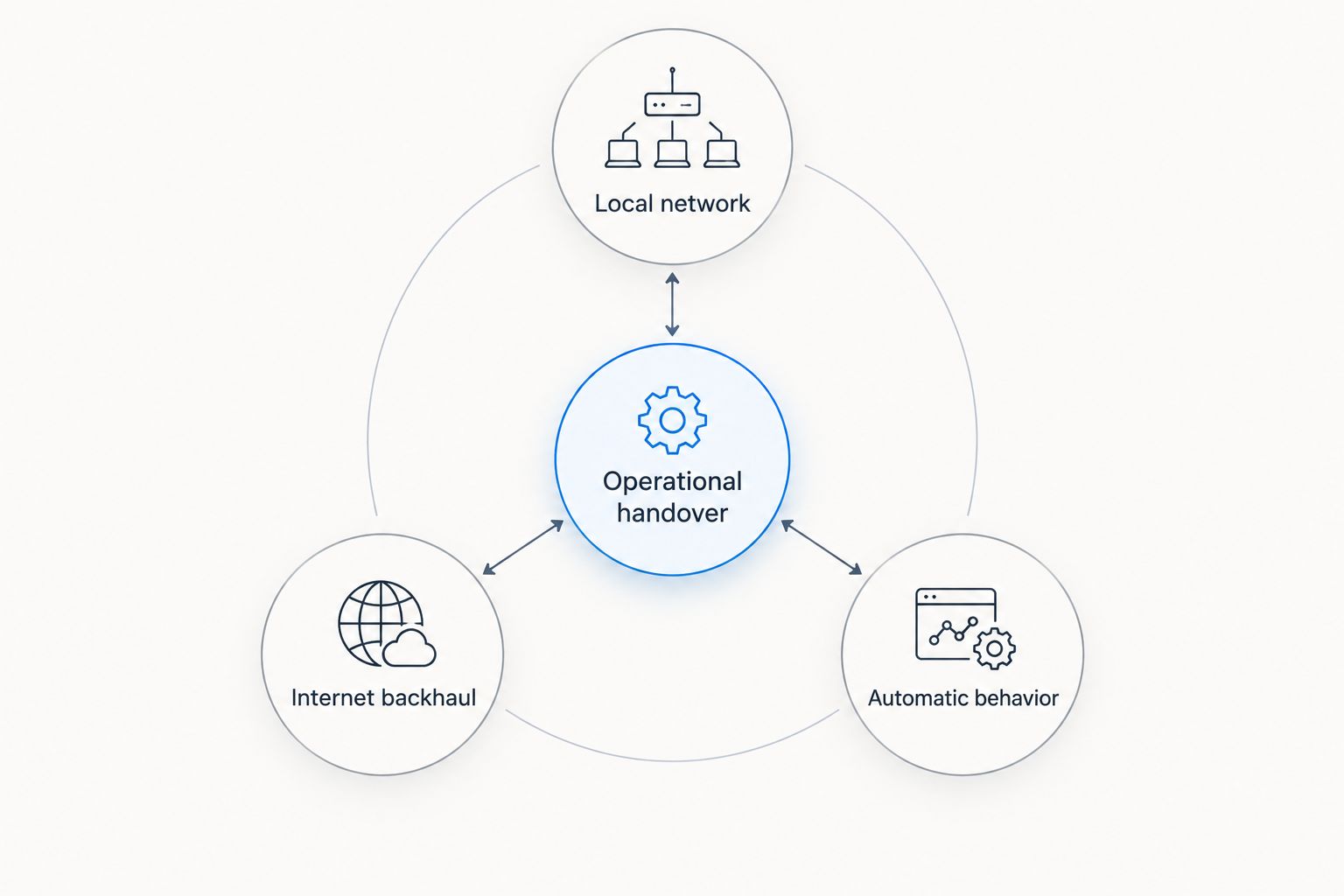
For your 2026 deployment record, separate the work into these components:
- Local network: Identify each radio technology, operating band, equipment configuration, and applicable authorization.
- Internet backhaul: Confirm the terrestrial or satellite service, terminal approval, account eligibility, and permitted locations.
- Automatic behavior: Document what starts transmitting after a restart, an outage, a scheduled check, or a failover event.
- Operational handover: Give the field team the approved configuration, restrictions, documents, and escalation contact.
The benefit of a combined network is access to different communications paths. The limitation is that adding paths adds configuration and compliance questions; decentralization does not remove radio rules.
A practical acceptance check is to review normal operation and the outage response separately. Confirm which device transmits in each condition and whether the documented permissions cover that activity.
FAQ
Is satellite communication legal everywhere in 2026?
No—satellite communication is not legal everywhere in 2026. Check the destination’s import, possession, transmission, and service requirements for your exact equipment before travel or deployment.
Does a satellite coverage map prove I can legally use the service?
No—a coverage map does not establish legal permission. Confirm local authorization and your provider’s account and operating restrictions separately.
Can I take a satellite phone abroad if it stays switched off?
Not automatically; import or possession restrictions can apply even when a satellite phone is switched off. Ask the destination’s customs authority about the exact device before departure.
Do I always need my own satellite operator license?
No—the applicable licensing arrangement depends on the jurisdiction, system, and use. Ask the regulator whether your operation is covered by an existing authorization or requires a separate permit.
Are satellite messengers exempt from satellite phone restrictions?
Do not assume satellite messengers are exempt. Ask how the destination classifies your exact device and whether its import, possession, and messaging functions are permitted.
Does emergency use automatically override satellite restrictions?
No—an emergency purpose does not establish a universal exemption. Any exception must come from the applicable law or authorization, and planned deployments should resolve permissions in advance.
Does choosing HeliosNet LLC infrastructure settle local legal requirements?
No—choosing HeliosNet LLC infrastructure does not establish local authorization. Equipment selection, service eligibility, customs requirements, and permission to transmit require separate confirmation.
One last thing
An unattended terminal still transmits on your behalf. Before a 2026 deployment, check startup behavior, scheduled telemetry, tracking, and automatic failover—not just what happens when someone presses a send button.
Ask the person responsible for compliance to review the same configuration the field team will actually use. Keep equipment operating within the confirmed authorization, including when the primary connection fails.